by Eva Glassman | Aug 19, 2024 | Blog, Featured
By: Eva Glassman | Associate, Marketing & Communications at C200
Introduction
While women have achieved record representation in senior corporate leadership, many research experts are flagging warning signs that the progress we’ve witnessed over the past several decades may be stagnating.
Why is this happening, and what can we do about it? In this article, we’ll dive into the numbers and explore the state of women’s representation across the corporate pipeline, why research experts are warning of backwards trends in progress, and why mentorship and educational programming are vital resources for senior corporate women poised for the C-Suite.
Representation of women across the corporate pipeline
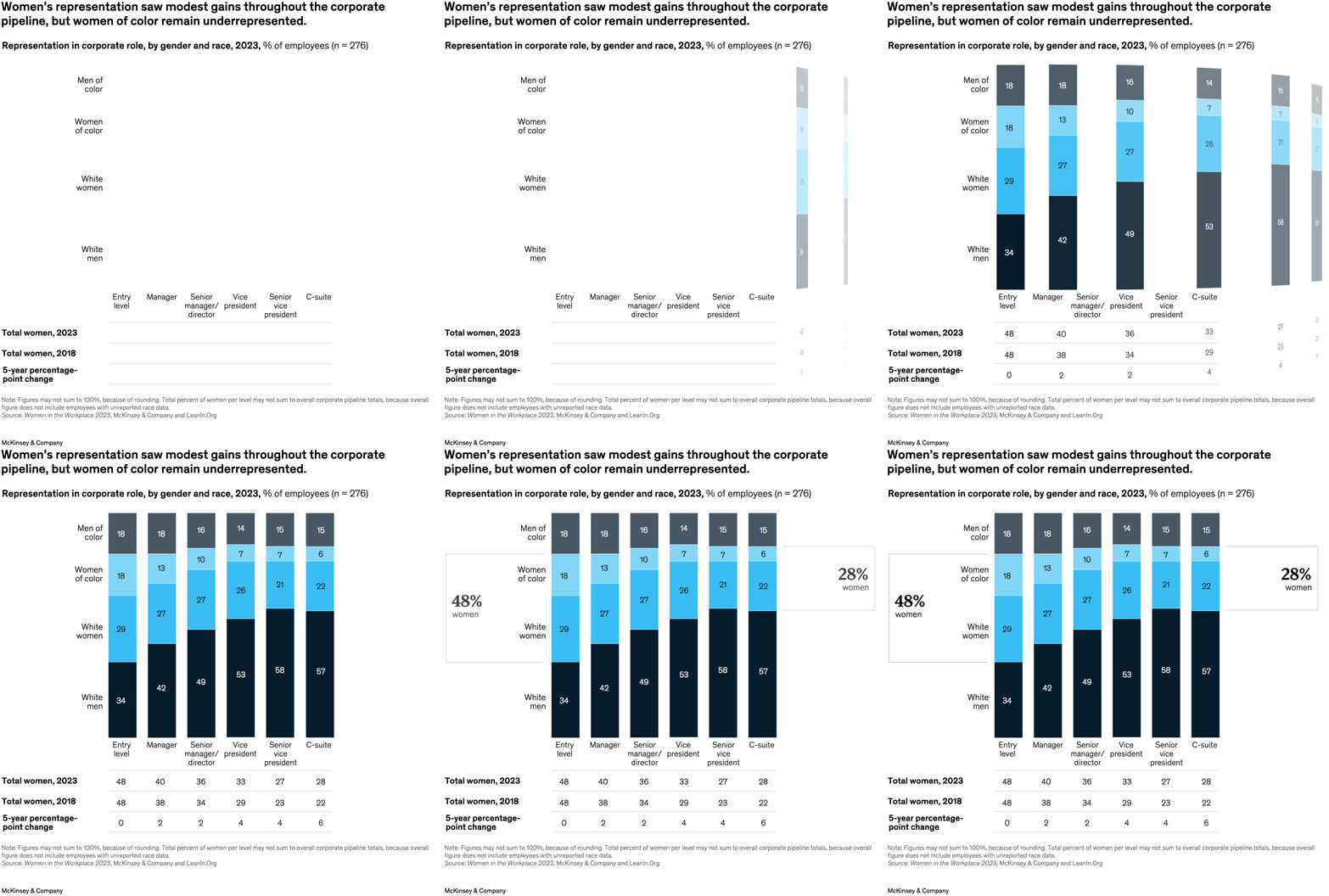
McKinsey’s 2023 Women in the Workplace report shares important progress in terms of gender equality across the corporate pipeline. For example, since 2015, the number of women in the C-Suite has increased from 17% to 28%, with representation of women at the VP and SVP levels increasing as well.
While that is a significant jump, it’s worth considering the following:
- The 11-point increase occurred over a gradual, eight-year period.
- Since women make up about half of the world’s population, the increase to 28% only continues to reflect the gender disparity at the high leadership level.
- The 28% of C-Suite roles going to women is a drop from 48% of entry-level roles.
According to McKinsey, the higher the position in the company, the lower the percentage of women representation; meanwhile, the percentage of men represented at each role increases towards the C-Suite (52% to 72%).
While progress has been unequal and slow, it may no longer be so steady.
This year, researchers have marked an alarming trend in the senior corporate landscape: a decreased rate in hiring women into those positions. The World Economic Forum’s recent Global 2024 Gender Gap Report finds that, in 2023, the rate dropped from 37.5% to 36.9%, and dropped again to 36.4% in 2024—to below 2021 levels.

While one may argue that these decreases are negligible, researchers urge not to dismiss them. S&P Global, in their recent report on this trend, says: “Exponential growth [of women’s representation among senior corporate positions] over a decade is showing signs of losing momentum. Growth no longer appears exponential. A waning focus on diversity initiatives […] calls our previous gender parity estimates into question.”
Year-on-Year Growth in Women’s Representation among Senior Leadership Positions in S&P Global Total Market Index Firms

Source: S&P Global Market Intelligence Quantamental Research. Data as Data as at 03/04/2024.
These numbers could be the very first warning signs of a trend backwards in progress for senior corporate women.
Mentorship and educational programming are invaluable resources to businesswomen.
With continued progress for senior corporate women coming into question, ensuring they have the skills, support, and connections needed to ascend to the C-Suite has never been more important—and with so few women at that level as it is, finding such resources and a community has never been easy, either.
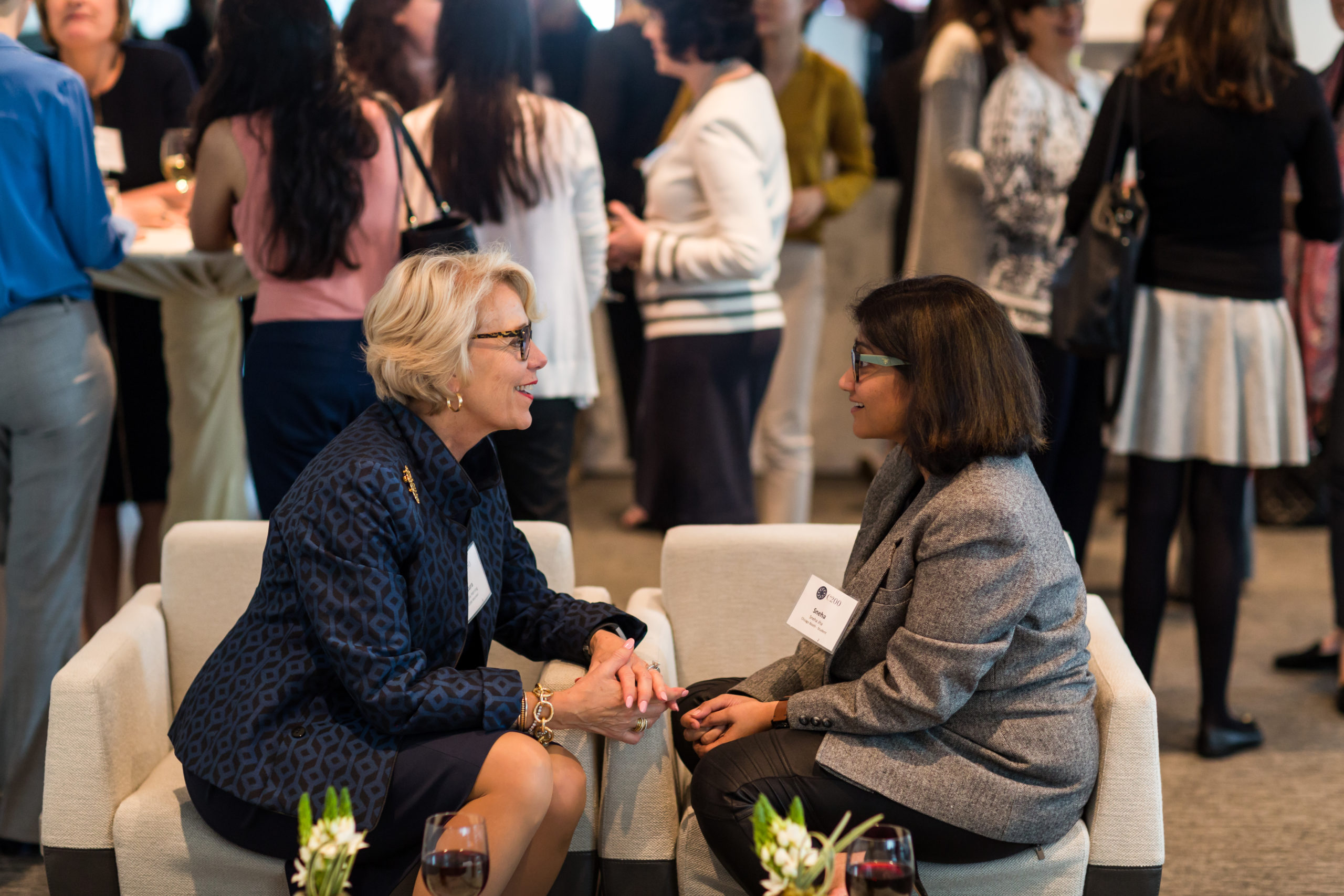
A study from Development Dimensions International found that 63% of women have never had a formal mentor. When mid- and senior-level corporate leaders get access to mentorship and educational programming for their professional growth, it can make the difference when they are up for promotion to the C-Suite. However, educational resources cost time and money, and it can be hard to cut through the market to find something truly transformational.
C200 has always been in the fight for gender equity in senior corporate leadership.
C200’s mission is to inspire, educate, support, and advance current and future women entrepreneurs and corporate, profit-center leaders. Since our founding in 1982, we have worked every single day to advance women in business and have grown our membership to over 400 incredibly successful businesswomen. Our mission to ensure more women like our members continue to exist, accel, and succeed has never mattered more than it does today.
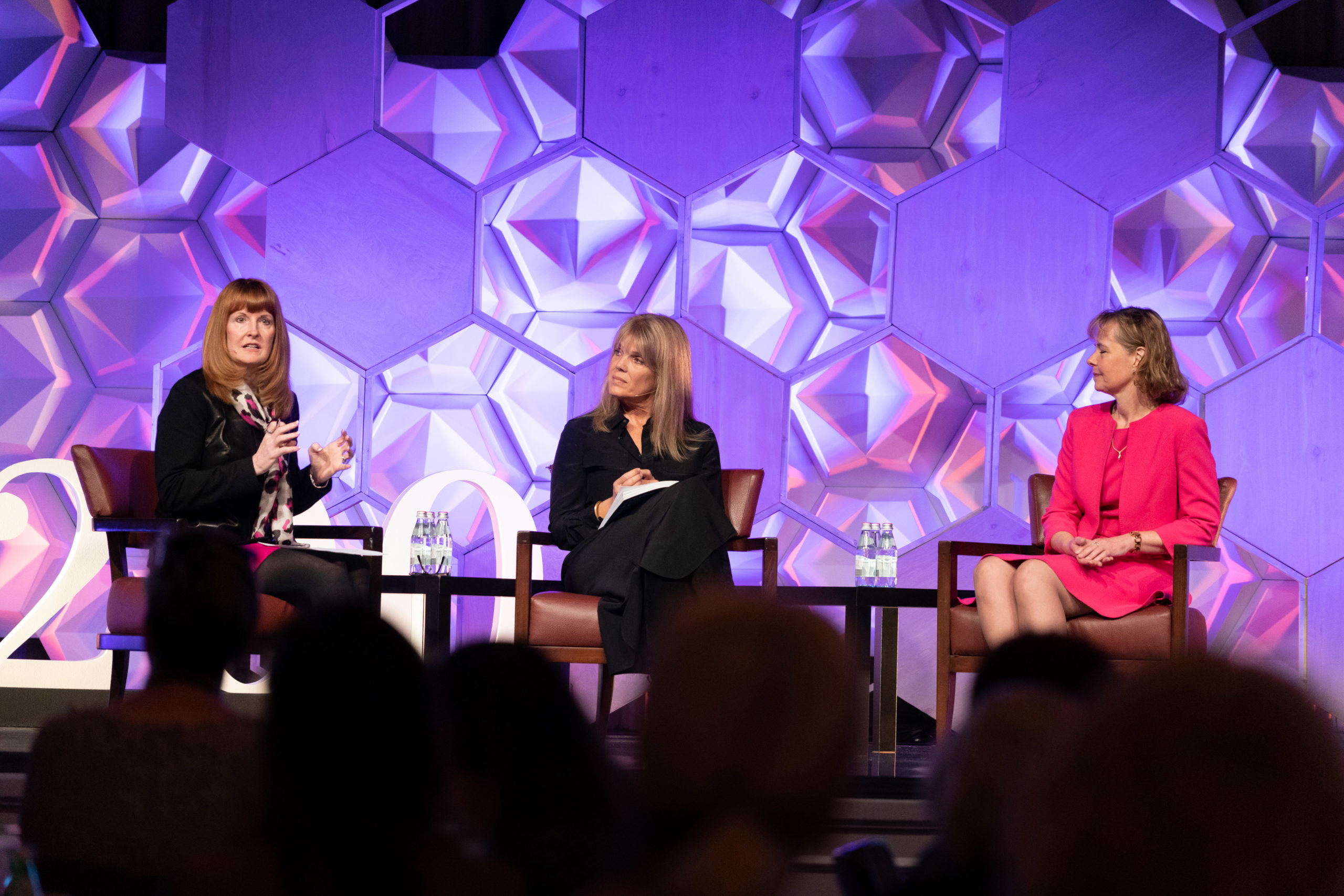 Corporate executives make up over half of our membership, some of the most influential women in business in the world who know firsthand how easily progress can be undone; many of them were the first pavers of the progress for senior corporate women that we see today. The numbers we’ve explored in this article show us all that we need to be doing more for the next generation of women leaders if they are to succeed. As McKinsey correctly predicts, “These hard-earned gains are encouraging yet fragile.”
At C200, we see the numbers for corporate women: the progress, the room to grow, and the alarming trend backwards. However, we also see the path forward for women ready to advance into executive and C-Suite leadership—and that’s with C-Ahead®.
C-Ahead® with C200
Part of C200’s mission involves investing in and developing best-in-class educational programming and mentorship opportunities, and we’re proud to offer a variety of Advancing Women Programs for businesswomen at every stage of their journey.
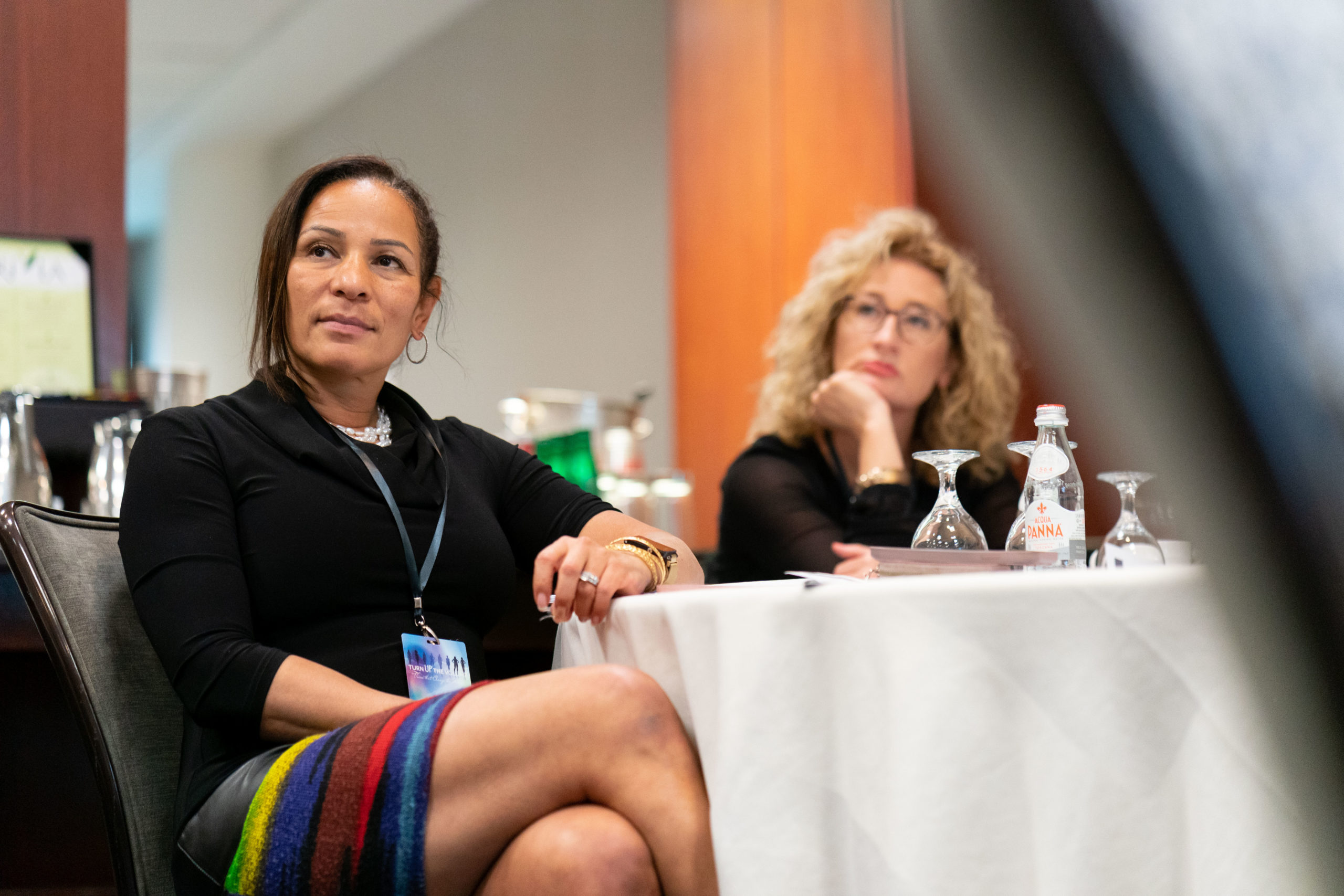 C-Ahead® is designed for high-potential, senior corporate women at a critical point in their careers, the point at which it becomes much more difficult to ascend the corporate ladder into executive or C-Suite leadership. This is the inflection point where support, skills, advice, and community can make all the difference for these women—and that’s what C-Ahead® provides.
Ready to C-Ahead® to your future as a major corporate leader? Learn more and apply to join our next cohort by August 30, 2024.
References

by Eva Glassman | Aug 15, 2024 | Blog, Featured
C200 is thrilled to announce that JPMorgan Chase Commercial Banking is an official sponsor of our 2024 Annual Conference, which takes place on September 26-28 in New York City. C200 is a registered nonprofit that works to support and celebrate the advancement of women in business.
Our mission is to inspire, support, educate, and advance current and future women entrepreneurs and corporate, profit-center leaders. Our Annual Conference is a major touchstone, where women business leaders, founders, allies, and speakers convene to build community, network, access resources, and ideate new opportunities to advance our mission. It is through coming together with like-minded individuals and organizations that we are truly able to make a difference.
With JPMorgan Chase Commercial Banking’s support, C200 is able to expand educational materials and courses, networking and mentorship opportunities, and support MBA scholarships and other resources for women in business.
“We are energized to be partnering with JPMorgan Chase Commercial Banking for our 2024 Annual Conference,” says Myla Skinner, CEO of C200. “We know they are just as passionate about our mission as we are, and we look forward to all that we’ll accomplish together this year and beyond with their help.”
JPMorgan Chase Commercial Banking is committed to strengthening local and diverse-owned businesses and advancing communities. The firm does this through providing opportunities to access capital, expertise, networking opportunities, and financial solutions to spur business growth.
“Empowering women business leaders and founders drives stronger communities, companies, and local economies, which bolsters both national and international economic growth,” said Fred Royall, National Head of Diverse Businesses at JPMorgan Chase Commercial Banking. “We are proud to support C200’s work to create spaces, opportunities, and resources that help women in business from all backgrounds thrive.”
JPMorgan Chase Commercial Banking’s support and alignment with our mission will expand our opportunities to advance women in business this year and beyond. C200 looks forward to continuing our investment in women business leaders and founders around the globe through this relationship.
You can learn more about JPMorganChase’s work supporting women in business here: https://www.jpmorgan.com/commercial-banking
You can learn more about C200’s mission, membership, and Advancing Women Programs here: www.c200.org
by Eva Glassman | Aug 15, 2024 | Blog, Featured
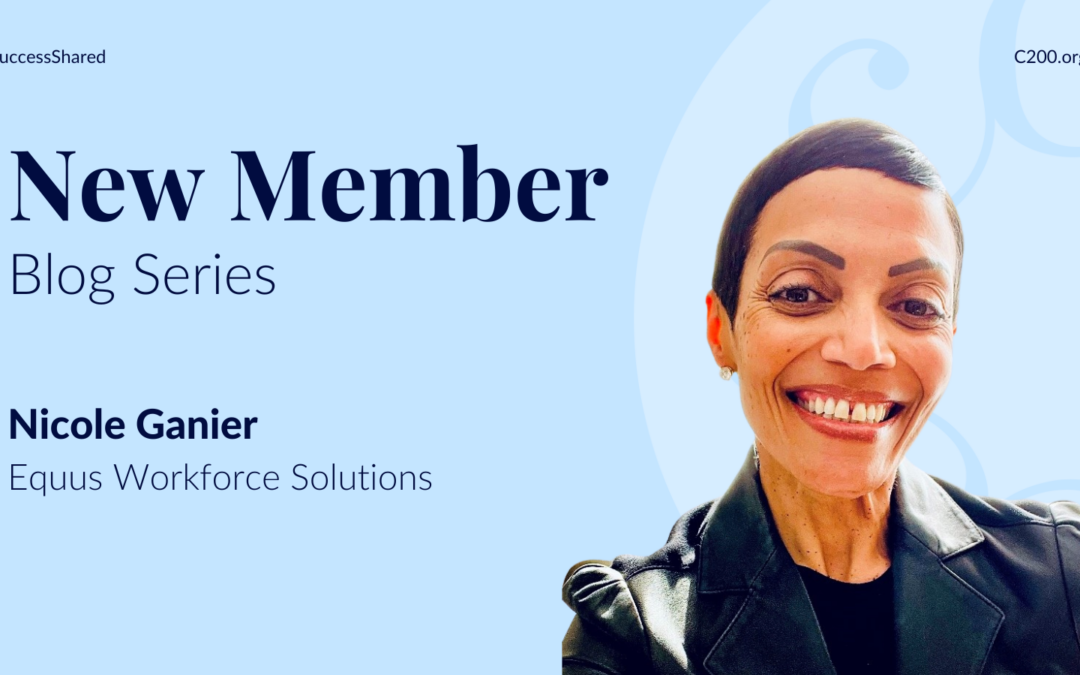
Nicole Ganier is VP of Operations at Equus Workforce Solutions, a workforce development services provider across North America. Nicole attributes her passion, drive, and purpose for empowering individuals from watching her father’s entrepreneurial and people-savvy nature growing up. Outside of work, Nicole spends time with her daughter and finds joy through her volunteering for the LGBTQ community experiencing homelessness. Nicole has been a member of C200 since March 2024.
Eva Glassman: What is it like being VP of Operations at Equus Workforce Solutions?
Nicole Ganier: It’ll be four years this Fall that I’ve been with Equus. We are the largest workforce development and health and human service organization in the US. We partner with cities, counties, states, and the federal government to provide workforce and health and human services on their behalf. My responsibility is overseeing our operations west of Texas all the way to Hawaii. I have three colleagues who cover the remainder of the country, and together we provide services in 35 states. Typically, our projects are county-based and have 30-40 employees who engage with participants and employers to make an impact in the communities we serve. I have a wonderful team of Regional Directors supporting our operations and working with our Funding community to ensure we’re meeting their objectives.
I came to this work from the private sector after spending over 25 years in the staffing and recruiting industry. Working in the public sector now, my team and I directly support individuals who have found themselves out of work for a multitude of reasons. Our customers are trying to find a career pathway that provides financial stability and food security. Our tagline is: “We change lives.” Although that might sound a bit corny to some, we take pride in that! Our real mission is not just changing the lives of the participants that come through our doors—from young adults to seniors—but also the team members we employ who find purpose and passion in the work we do together.
Many of our participants experience homelessness. I’m based in California, a state where the national homelessness crisis is most prevalent. During the pandemic, homeless individuals were especially vulnerable to contracting COVID due to how quickly it spread in shelter-type environments. Because of this, San Diego County asked us if we would consider helping to oversee the effort to temporarily house individuals experiencing homelessness as well as COVID in a non-congregate environment, and we accepted the challenge. Through that opportunity, I helped to birth a new organization called Equitable Social Solutions. Equitable provides an array of homelessness prevention and housing supports with the goal to place individuals and families in permanent, stable housing, and provide the necessary tools and support to develop self-sufficiency.
I love the work we do. It was a perfect segue for me, having worked for and led large-scale sales and operations teams in staffing organizations, to now being able to have my pulse on the worker—the actual individual person—who’s in need of guidance, coaching, and support to find their way on a path to success.
So many individuals—whether it be because of addiction, layoffs, or mental health—find themselves unemployed and easily homeless if they don’t have supports in place to weather that time. We’ve really leaned into that work and now operate and oversee projects specific to solving the homelessness crisis in California, Oregon, Illinois, and Wisconsin. I’m very proud of this as it is a passion of mine: every person deserves a safe and affordable place to call home!
EG: I read that you graduated from California State University (CSU) and studied sociology in Spain. What was your initial educational background, and how did your career evolve from that point? Did you wind up in the place you thought? What did you learn from it all?
NG: I always like to mention my study abroad experience in Spain, because we all have experiences that call us to step out and start finding our own voice, either by choice or necessity. For me, that was studying abroad, choosing to experience the rest of the world and see what else was out there. It was my sociology professor who suggested it; to this day, I consider it one of the best years of my life because I really grew up during that time.
I’m the youngest of three girls, and all of us have great careers. We’re fortunate we grew up in a two-parent household, which—especially as time has gone by—was truly a luxury. My parents will celebrate 65 years of marriage this year. I’ve had such great role models throughout my life, but having a close-knit family really allowed me to spread my wings.
In my early 20s, I considered entering a career in law or advocacy of some sort, but I had trouble envisioning how that would look. As I got older, I realized that my father being an entrepreneur had a profound impact on what mattered to me. He had his own construction company, and his team just adored him because he was personable, really cared about them, and the work gave them a sense of livelihood and the ability to take care of their families. Witnessing this connection created a strong impression on me and made me realize I wanted to create that for others in my own career. I knew I wanted to support and help people in finding work—the everyday human who has to work hard to take care of their family—like my father did.
Right out of college, I taught high school English for two years and realized quickly I couldn’t afford this path. Through family connections, I realized that I could be a strong salesperson because I like to talk, I’m sociable, and pretty confident most days. I landed a position with ADP, which provided me the professional sales training I needed, and grew from there.
While at ADP, I’ll always remember a recruiter calling me with an opportunity at an employment agency, which I had no idea what they were at the time. Learning more about employment agencies marked the start of finding work that meant something to me personally. I was able to connect it back to what I appreciated most about my father’s work.
I became a relatively successful salesperson within the staffing industry, making different leaps over the years. When I was 28, Janice Bryant-Howroyd, who owns the ACT-1 Group of Companies, gave me the opportunity to join her company as a Director. I quickly became a Vice President, and then her right hand in running ACT-1 as their Executive Vice President. Janice saw something special in me! She invested in me professionally and personally. Her investment helped me to gain greater confidence in myself. The opportunities she provided created a solid career trajectory for me going forward. I will always be grateful to her!
After that, I had the opportunity to serve as President of a Magic Johnson Enterprise organization, Magic Workforce Solutions, then on to Volt, Manpower, and AMN Healthcare. It wasn’t until I found myself here at Equus that I fell in love with what I do. I was at a point in my career where I felt like I could do my work with my eyes closed. I had great opportunities, met amazing people, been a part of wonderful teams—but it was still work, it was about trying to get to the next level up the ladder. I’m also a cancer survivor, and after that experience, I wanted to make sure that my work was purpose-driven.
Now, I’m in a position where I truly, genuinely enjoy what we do. I feel and see the impact of the decisions I make within our organization’s culture and how that impacts team members within Equus and Equitable and throughout the communities we serve.
I believe I’m an example for black and brown women that hard work and resiliency can open the door wide to possibility, but you then have to make an intentional choice to walk boldly through it. At the end of the day, I was raised by two parents who only had a high school education but believed in family, love, and hard work. I point to my sisters and myself, all of whom are college graduates and professional women, to show what’s possible. There’s no formula for success; much of it is working to make things happen for yourself and being your own advocate.
Growing up, I always heard, “Find a job that you love,” and so I always kept that in mind, constantly seeking but never quite finding it. I was good at my job and successful at it, but what did that really mean? It wasn’t until I was 51 that I found the answer to that question (I’m almost 55 now).
I can’t sit here and say, “Here was my plan!” The plan has always been to be a good person, to be thoughtful and kind, to do good work, and to be a great mom. As women, we have to appreciate the experiences and the journeys we go through to realize where and who we are. It’s all part of your path, the important steps in order to realize, “What does happiness really look like? What does success look like for me?” When I was in my 20s and 30s, I thought it meant a great paycheck and a title. Now, as I continue to grow in the ebb and flow of life, I know what purpose-driven living really looks and feels like.
EG: What about C200? How did you find out about this organization, and what or who made you join?
NG: When I joined Equus, I was fortunate to have the opportunity to do work I’m passionate about. Last year, I realized I needed to make sure I was being challenged and inspired by other professional women outside of my circle and across other industries. I’m an ambitious person, and I like to surround myself with other women leaders who create inspiration. I have been in situations in my career where I have reached out to other women leaders who didn’t necessarily give me the support or uplift I was needing. Back in the day (and yes, even now), it’s not uncommon for career-driven women to see each other as threats. I just want women to have an easier road, so I’m interested in anything I can do to lend to that conversation and be action-oriented towards that.
When I saw that Janelle Bieler joined C200 last year, I put it on my radar. We worked together many years ago at Manpower and I’ve always been a fan of hers. I finally reached out to C200 about joining after seeing pictures from the 2023 Annual Conference in San Diego on LinkedIn. I could see the genuine sense of camaraderie among the C200 women, and I could tell that they are all about making change and opportunity for each other as well as others who are coming up behind us. I thought, “I’m going to join for myself.”
The more I learned about C200, I realized this point of my career journey doesn’t have to be the final chapter, and this would be a great organization to learn from and give back to. These women recognize they have been afforded wonderful opportunities, and it’s a way to ensure the next generation of women have an easier time reaching success. Joining C200, I feel as though a synergy has come together because that ethos is who I am. If I can help, I am always all about it, especially to another woman.
EG: Speaking of, I’m curious whether you had any female mentors over the course of your own career.
NG: There have been three main women in my life. The first is my mother, who has never worked for anyone, but always saw her family and raising my sisters and I, her grandkids, and great grandkids as her job. I always respected that, because it was the example of doing whatever you do at 100% and making sure you’re successful at it. I know my mother looks at the success of my sisters and I as her achievement.
The second woman is my oldest sister, who is an executive for a local television station here in Southern California. She was in the world of venture capital for several years, then entertainment, and such an inspiration to me as a professional woman. She showed me what was possible! Sometimes, when I’m doing speaking engagements, I actually hear her voice in my head.
Finally, Janice Bryant-Howroyd, who I mentioned before, was a wonderful mentor of mine who gave me that first big opportunity to lead her company, ACT-1 Personnel Services. As an African-American woman herself, Janice is someone who I admire, and because of her, I was able to gain the confidence needed to be the effective leader I am: asking the right questions, putting people first, pushing back when necessary, speaking to big rooms of people, and presenting myself authentically. We’ve lost touch over the years, but were very close and she’ll always hold a special place in my heart.
While he’s not a woman, Shelley Stewart was another strong mentor. He was the chief procurement officer for a global corporation, and he took me under his wing when I was with ACT-1. I will always remember I was at an event with him for the National Minority Supplier Diversity Council. I remember he literally took my hand and said, “You’re coming with me,” and it was into this room full of the CEOs of big companies like Bank of America, Disney, and Merck. It was in that moment I realized, they’re just like me: they all have stories, an upbringing—some good and some bad—and it’s all about somebody grabbing your hand and saying to you, “Look at what’s out there for you.” If you can envision it, it’s possible.
The only barrier, quite honestly, is yourself, and a defeatist mentality. If you dream big and can see it for yourself, then you can definitely make it happen for yourself.
EG: What does being a “woman in business” mean to you, if anything? How do you apply that thinking to how you lead and to your professional life?
NG: Being a woman in business is how I live. It touches upon every aspect of my life as a professional, a mom, a daughter, and a friend: being thoughtful, empathetic, and considerate, but also strong, direct, and a voice for others.
For example, seventeen years ago when my daughter was born, she became my biggest inspiration and motivator. I didn’t have the ability to be a stay-at-home mother like my mom, but I was determined to be the best mom I could be. If I wanted to be the main influencer in her life, I needed to make sure that I lived my life right. I wanted her to be strong and an independent thinker, which meant that I needed to dig deep to project that.
This is how I lead my professional life, too. There are a lot of people that look to me as an example, especially because I’m a woman of color. I can either run away from that, or I can own it and accept it as a part of who I am and my purpose.
The more you experience in your lifetime, the better leader you become, because time allows you to gain the self-awareness and perspective to evolve. I sometimes think back to when I was a leader at 27, 28 years old. What did being a leader mean to me then? How did I move in that position? Completely differently than how I do today! Now, I know titles matter more to some; my title is within myself. Of course, I want to get paid as equally as my male counterparts, but I really don’t care what I’m called. I just know why I’m here to do the work that I’m doing.
I have a board in my office that always shows the number of employees I’m directly responsible for. Right now, it shows 848. That’s 848 human beings I am responsible to make good decisions for on their behalf. For me, being a leader is making sure I’m representing every single one of their concerns and the work we all do together.
EG: Outside of work, what do you like to do for fun? How do you spend your time?
NG: My world is focused around women’s basketball right now. My daughter is quite the player and is being recruited by some great universities, so leaning into her needs and traveling with her club team is a huge commitment. I don’t have lots of free time because it’s a full-time job managing the opportunities that are coming her way—I guess I’m her “momager!” In all seriousness, she is truly my joy. Next summer, the time I’ve been dedicating to her so she can realize her dream of playing Division One college basketball will come to an end. She’ll be off to a fabulous university, and I am looking forward to giving my time to something else and looking forward to getting more involved with C200.
A lot of my joy comes from the volunteer work I do addressing homelessness as well as being an ally for young adults in the LGBTQ+ community. As a proud mom to a gay young woman, I have met so many girls who aren’t comfortable standing strong in who they are, as my daughter does, and I’d like to continue to be a resource for them and their families.
At this point in my life—while I’m never going to turn down a great massage, spa day, or some travel from time to time—it’s really about the people in my life and the impact I’m able to make.
EG: What is your advice to aspiring women business leaders to advance their careers?
NG: Don’t expect it to happen—make it happen. You have to go after it. It’s taking control of your destiny and deciding what you want. Some people make it seem like you must create a strict plan, but I don’t see it that way. It’s deciding what you want to be or do, and start living it, even before people give you the title or the responsibility. That way, you’re projecting into the world who you are. It becomes simple to others why you should have the next position or opportunity because you’ve already been assuming it.
Also remember: we’re not in control of the universe. We can only “control the controllables.” Many women in leadership positions are type-A personalities, so this is especially important to come to terms with. You have to be willing to pivot and understand there are going to be times when success comes, and there are going to be challenging times when you have to stay focused and resilient. When I was growing up, I always heard that a woman can do anything and everything she wants. You can do it all, but that doesn’t mean you’re going to do it all wonderfully. There’s always a consequence, right? Prioritize and understand what’s important at the time and understand it may change in a year or two, and that’s okay. I’ve gotten some opportunities over the past few years I’ve declined, because I wanted to be home and present with my teenage daughter during crucial years. I knew what was most important for me. We all have to make choices that are best for us and don’t worry about judgement from others!
Throughout my journey, being resilient is the quality that has allowed me to overcome life’s challenging times and to always come back stronger than before. I believe in positive self-talk and believing in my abilities. You can’t expect someone to believe in you if you don’t believe in yourself! I’m a vulnerable and transparent leader—this creates trust and relatability. By sharing my own story, I believe I’m inspiring others to share their own so we may all grow and continue bettering our best!
—
Connect with Nicole on LinkedIn!
by Eva Glassman | Jul 8, 2024 | Blog, Featured
C200 is honored and thrilled to announce the recipients of our 2024 Luminary Awards!
We want to thank our members and the Luminary Awards Committee for an incredible nomination and voting process. We received a record number of nominations this year, all incredible individuals who have made significant impacts for businesswomen in their respective fields. We are proud of our record turnout this year and are excited to continue this wonderful tradition that celebrates and funds the advancement of businesswomen around the world.
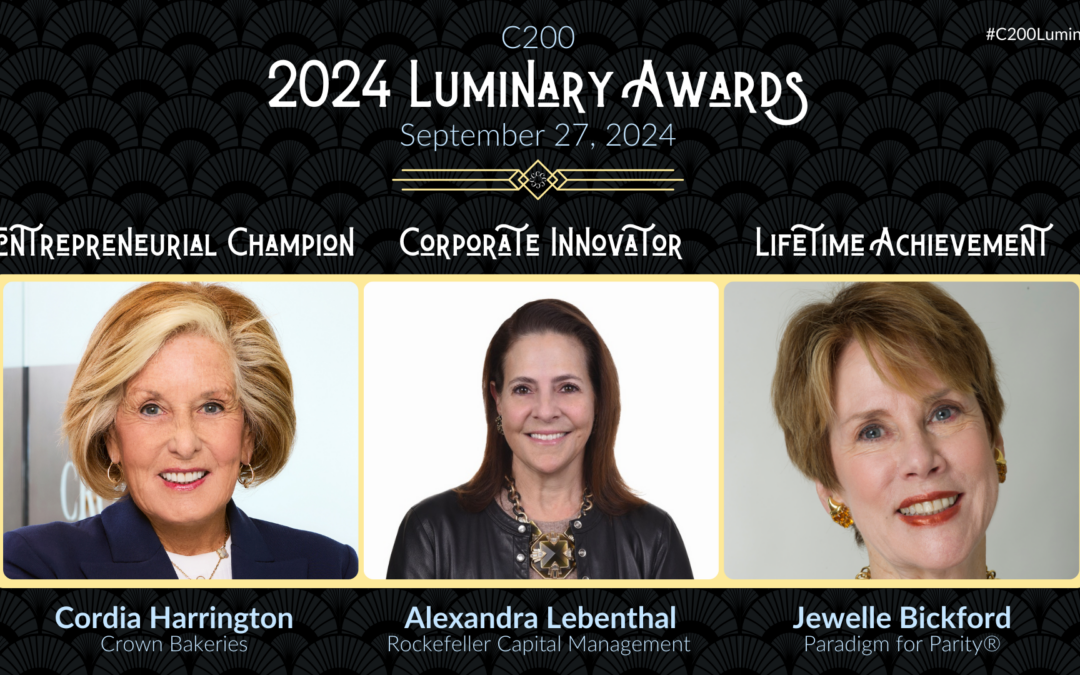
This year, we have awards in three distinct categories: Entrepreneurial Champion, Corporate Innovator, and Lifetime Achievement. More information about the history of our Luminary Awards, how awardees are nominated and chosen, and detailed descriptions of each award category, can be found here.
Without further ado, here are the winners of each award:
Entrepreneurial Champion: Cordia Harrington | Crown Bakeries
Cordia Harrington is CEO and founder of Crown Bakeries, a highly-automated, high-speed baking company that makes over 15 million baked goods daily and employs more than 1,700 people, serving elite customers in the United States, South America and the Caribbean. As CEO, Ms. Harrington guides the executive team to successful planning, business development, sales and marketing, and brand management.
Ms. Harrington serves on the Ascent Global Logistics Board of Directors, the Global Crossing Airlines Board of Directors, and the Belmont University Board of Trustees. She is the immediate past Chair of the American Bakers Association Board of Directors and past Chair of the Chief Executives Organization Board of Directors.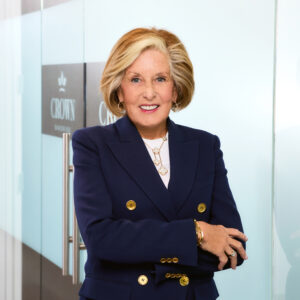
Under Ms. Harrington’s leadership, Crown Bakeries have received many awards, including the 50 Fastest-Growing Women-Owned Businesses, Business with Purpose Award, and Nashville Business Journal’s Best in Business Award. Ms. Harrington was listed on Forbes magazine’s list of 100 wealthiest self-made women in 2020, 2022, 2023 and 2024. The University of Arkansas awarded her an honorary Doctor of Humane Letters degree in 2020. Ms. Harrington was named Nashville Post’s 2020 CEO of the Year and was included on their list of “Most Powerful Women” in 2021. She was inducted into the American Society of Baking Hall of Fame in February 2018, and Directors & Boards magazine named her a “Director to Watch.” She received the Most Admired CEO Lifetime Achievement Award from the Nashville Business Journal in 2017 and has been recognized by numerous other organizations for her commitment to excellence and entrepreneurial spirit.
Ms. Harrington attended Kansai Gaidai University in Osaka, Japan; she graduated from the University of Arkansas with a Bachelor of Science degree. She currently resides in Franklin, Tennessee, with her husband Tom. Together they have five children and eleven grandchildren.
“I am deeply honored to be recognized by the members of C200 for the 2024 Entrepreneurial Champion Luminary Award. Throughout my career, I am proud that my professional endeavors have allowed me to create opportunities for working women. As the founder and CEO of Crown Bakeries, I believe our organization benefits greatly from female leadership, both in our bakeries and across our corporate landscape. Through C200’s mission to inspire, educate, and support women in business, we can make a difference together and impact the lives of other female entrepreneurs for years to come.”
Corporate Innovator: Alexandra Lebenthal | Rockefeller Capital Management
Alexandra Lebenthal is a Managing Director and Senior Banker at Rockefeller Capital Management where she leads Financial Sponsor Coverage. Prior to joining Rockefeller in October 2023, she was a Senior Advisor at Houlihan Lokey where she led an initiative focused on Women Led Companies within the Financial Sponsor Group. For the decade prior, she was the CEO of Lebenthal Holdings, a diversified financial services firm that included the nation’s largest woman-owned broker dealer. Coming from a storied Wall Street family, her grandparents, Louis and Sayra Lebenthal, founded Lebenthal & Co., Inc, a municipal bond specialist, in 1925. Her father, Jim Lebenthal, created a mass market for municipal bonds.
After starting her career at Kidder Peabody, Ms. Lebenthal joined Lebenthal in 1988 and became President and CEO in 1995 at the age of 31. She was also President of Lebenthal Funds, overseeing the firm’s mutual and money market funds. After successfully diversifying the firm beyond municipal bonds, Alexandra engineered its sale in 2001 to The Advest Group, remaining at the firm until it was subsequently sold to Merrill Lynch in 2005. During that time, in addition to managing Lebenthal, she also ran marketing and municipal capital markets for the parent company. She started anew in 2007, building Lebenthal Holdings into an asset management, wealth management and capital markets boutique. Lebenthal was the number one woman-owned firm in debt and equity capital markets from 2012-2016.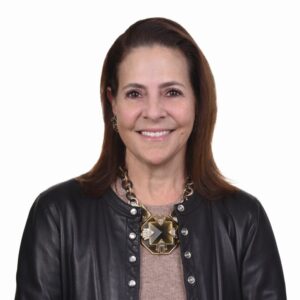
Ms. Lebenthal has had extensive board experience, including past roles at Broadridge Financial (NYSE-BR) and Care Investment Trust (NYSE-CRE). She was most recently a board member of Graf Acquisition Corp. IV (NYSE-GFOR). She is as a former board member and Treasurer of the Securities Industry Financial Markets Association (SIFMA). She is a member and the Northeast Regional Chair of C200, the leading organization for female businesswomen.
Ms. Lebenthal was named one of the top 50 Women in Wealth Management by Wealth Manager Magazine, as well as Private Asset Management. She has also been named to the Crain’s New York Top Women-Owned Businesses and the Crain’s Fastest 50 Growing Businesses in New York. More recently, she was named to Crain’s New York Business’ 2022 Notable Women on Wall Street, and to the 2023 Most Influential Women in Mid-Market M&A by Mergers & Acquisitions Magazine, as well as an Honorable Mention in 2022.
Ms. Lebenthal is the Co-founder of “The Women’s Executive Circle,” and “Women On Wall Street”, which cultivates high-profile Jewish women under the auspices of United Jewish Appeal. She is also a spokesperson for Insightec Targeted Ultrasound, a ground-breaking procedure for Essential Tremor she underwent in 2016.
Ms. Lebenthal’s first novel, “The Recessionistas,” a thriller set in Manhattan during the financial crisis, was published in August 2010.
A graduate of Princeton University with an A.B. in history, Ms. Lebenthal lives in New York City.
“I cannot tell you how much receiving the Corporate Innovator Award means to me. Every woman who is a member of C200 has achieved incredible success, so to be recognized by this amazing group of women makes it all the more special.”
Lifetime Achievement: Jewelle Bickford | Paradigm for Parity®
Jewelle Bickford is an investment banker who became the only woman in the United States named a global partner in the Rothschild Group. In 1994 she merged Bickford & Partners, Inc., her boutique securitization investment banking firm, into Rothschild Inc., in New York. Bickford & Partners had been consistently rated among the top five firms in the nation in the private placement of securitized assets. From 1994 to 2009, she was head of Debt Capital Markets at Rothschild Inc., where she specialized in the securitization and private placement of non-mortgage assets such as leases, credit cards, auto loans and other receivables. She was also a member of NM Rothschild’s Global Banking and Treasury Committee in London.
From 2009 to 2013 Mrs. Bickford developed GenSpring MultiFamily Office’s Women and Wealth program, and from 2013 until the end of 2020 she was a partner at Evercore Wealth Management creating the firm’s Private Wealth Education programs for families. Prior to founding Bickford & Partners, Inc. in 1998, Mrs. Bickford had spent eight years at Dillion, Read and Citibank’s municipal bond department. Before that, she had worked for three years for Mayor Edward Koch as the Director of the Mayor’s Community Board Assistance Office.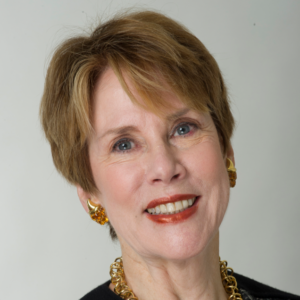
Mrs. Bickford is a member of the Council on Foreign Relations and the founder of its Women and Foreign Policy Program, the Council’s task force that analyzes how elevating the status of women and girls advances U.S. foreign policy objectives and seeks to inform policymakers and the public on issues relevant to gender equality and U.S. foreign policy. Mrs. Bickford is a member of the board of two SPACs, Athena and Hera, which seek to acquire Fintech companies and take them public. She also currently serves on the board of EL Education, Inc., a twenty-seven year old non-profit corporation that resulted from a collaboration between The Harvard Graduate School of Education and Outward Bound USA. EL Education created new and exciting classrooms and teaching methods that have now been adopted and are flourishing in the entire Detroit, Charlotte and Denver school systems and a host of individual schools from coast to coast.
Mrs. Bickford is founding member and Co-Chair of Paradigm for Parity®, a group of CEOs, senior executives, corporate board members and business academics committed to achieving gender and racial parity at senior levels for women by 2030.
She is a member of the Business Committee of the Metropolitan Museum and a member of the Committee of 200. She was formerly a member of the board of the Women’s Economic Forum, and a former trustee of Women for Women International, Women’s Media Center, and Randolph Macon Women’s College (now Randolph College). From 2003 to 2007, she served on the board of the SEC-registered Torrey Funds.
From 2003 to 2007, she was invited to attend Fortune’s Most Powerful Women’s Conferences and last year Crain’s New York Business named her one of the top 50 women in the wealth advisory profession.
Mrs. Bickford earned a BA from Sarah Lawrence College and is a graduate of Duke’s Fuqua Business School’s Leadership Program.
“I am honored to receive this Lifetime Achievement award from C200, a community and camaraderie of women of great achievement in the business world, and a community which I’m proud to be a member of myself. The quality and values of the C200 sisterhood are truly unparalleled, and I thank my fellow members for this recognition and their dedication to uplifting women in business.”
Join us in supporting our 2024 Luminary Awardees and C200’s mission to inspire, educate, support, and advance current and future women entrepreneurs and corporate-profit center leaders.
Congratulations to Cordia, Alexandra, and Jewelle for this remarkable achievement. We’re proud of the work you each have done over the course of your careers and the influence it has had for women in business worldwide.
Our award recipients will be honored and celebrated on the evening of Friday, September 27, 2024, at our Luminary Awards Ceremony during the Gala Dinner at our 2024 Annual Conference in New York City. Individual tickets, tables, and sponsorship opportunities for the Gala Dinner are available for purchase at our Conference website. Your support of our award recipients raises critical funds for C200’s larger mission and vision to advance businesswomen worldwide. Together, through the celebration of these incredible women, we can make a big impact in the business landscape by creating more opportunities, spaces, and time for women in business to connect with, inspire, and help one another succeed in male-dominated spheres and set examples for the next generation of women leaders.
Note: If you have registered for the 2024 C200 Annual Conference, your registration includes a ticket to our Gala Dinner.