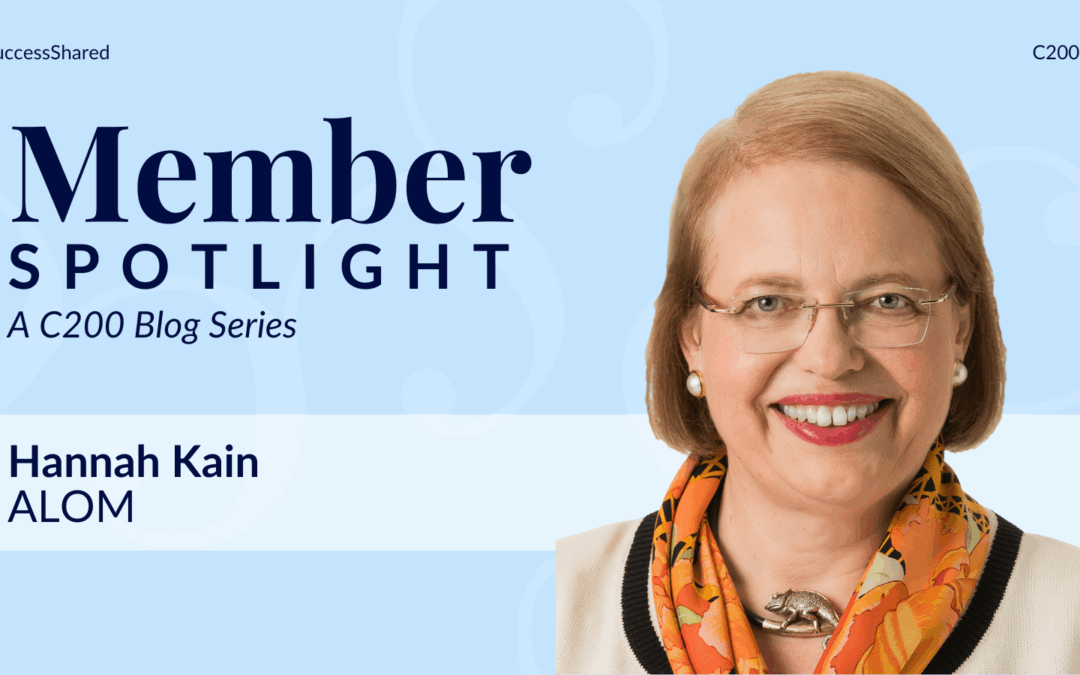
by Eva Glassman | Oct 7, 2025 | Blog, Featured
Hannah Kain is Founder, President, and CEO of ALOM, a global supply chain company based in Silicon Valley, California. Originally from Denmark, Hannah left her business and political careers for the US to fulfill her entrepreneurial dreams of starting a business. Hannah founded ALOM in 1997, and it has grown to become a leading organization in the supply chain industry, providing services for Fortune 500 customers from twenty global locations on five continents.
Hannah joined C200 in 2011 and has played pivotal role in growing C200 Membership in the Northwest Region. She started the Silicon Valley Council to better connect Members in the Region and is still the Council’s leader.
Hannah is the 2025 recipient of C200’s Entrepreneurial Champion Luminary Award, given by the C200 Sisterhood to entrepreneurial leaders creating success and impact in their industries and for businesswomen everywhere.
Eva Glassman: As President and CEO of ALOM, what is something you love about your role? What is something that’s often challenging about working in supply chain?
Hannah Kain: My friends always said, “What is a nice girl like you doing in an industry like that?” [Laughs] That was back when I first started. But even still, there were a number of different things about supply chain that really appealed to me. If you work in supply chain, you like physical things and are fascinated by how they move through the supply chain.
When I came from Denmark to the US, I was first on the East Coast before coming to Silicon Valley in 1994. At that time, no one was thinking about how emerging technologies could evolve supply chain processes. When we first started ALOM in 1997, we were pioneers in thinking about how technology could be used to support and even drive the supply chain.
To this day, something that gets my creative juices flowing is examining physical, digital, and financial supply chains altogether. I love looking at the data flow in order to align and fully situate it all together. It’s like cooking a super complicated meal; you have to source all the ingredients, prepare them, cook them, plate them, and finally, serve everything beautifully at the end.
I thrive when taking on complex situations and helping our customers through what needs to be done. We’ve been seeing a lot of complicated issues arise with projects impacted by current tariffs and trade policies. I really like the complex intersection of getting to support others, conceptualize the supply chain, and use different technology to solve problems.
EG: It sounds like the things you love about your work are the very same things you are challenged by. Do you think having that relationship with what you do is necessary to work in the supply chain industry?
HK: I do—but I think it’s true for any entrepreneur worth her salt. You’ve got to have the mindset of: anytime there’s challenge, there’s opportunity. If it was so easy, everybody could do it.
For all entrepreneurs, especially now with all the uncertainty in supply chain, the biggest challenge is to not panic. The supply chain industry got a bit tougher during COVID, and that experience is actually helping us stay calm today and not run at the first sign of trouble.
EG: You’re originally from Denmark and studied communications and political science in school. You were also at one point a Member of Parliament in Denmark! How did you go from your career in Danish politics to an entrepreneur in Silicon Valley?
HK: I learned a lot from being in politics. I started there when I was seventeen or eighteen and first ran for Parliament when I was twenty-one. It gave me the opportunity to work alongside some incredible statespeople, where I could examine their leadership styles and learn what made them effective. I loved being in politics, and while I was only a Member of Parliament for a short time, I was there because I was driven to make change.
My main career in Denmark, however, was in business. When I finished university, I worked at a manufacturing company, which gave me a lot of appreciation for the industry and nurtured my fascination for physical products. It got me thinking deeply about the business-to-business market, which eventually turns into business-to-consumer, and how that supply chain works on the demand side. It was a really important understanding to develop, because in the end, everything needs to work for the people who pay the bill.
Being an entrepreneur was a longtime dream of mine, ever since I was a young child; my drive to start my own company is what made me come to the US. Before founding ALOM, I had helped a number of other people start and grow their own companies, but I always had this feeling that starting my own company is what I was meant to do. Founding ALOM, even with the challenges I experience leading a modern supply chain company, is all a dream come true—literally.
EG: How did you find your way to C200? How did you first get involved? What has made you stay part of the Sisterhood?
HK: Before joining C200, I had been part of many different coaching groups. However, they were largely comprised of people whose businesses were smaller than mine, or people who were on a journey that I had already completed. While I love giving back to those still climbing the ladder, I wanted to spend time with people who were on the same part of the journey as me or had already done that next leg. I needed people who were thinking differently about problems to open up my own mind.
At one point, I attended a joint meeting between a group I was part of and C200, which is where I became fascinated with the organization. It was exactly what I was looking for, and I joined a couple of months later. One of the first events I attended was a dinner at C200 Member Katherine August-deWilde’s home, where I connected with a lot of different Members who I’m still in touch with today.
A few months after joining C200, I was asked to help coordinate the next C200 Annual Conference in San Francisco. I didn’t live in San Francisco (I was in San Jose) and didn’t know many Members in the area, but I thought it would be a good way to get to know more of the Sisterhood. I’ve always believed that you should give a lot to receive a lot, so I was committed to hosting, being active, getting to know others. So, I said yes, despite never having attended an Annual Conference yet!
When I was working on the Conference, I asked C200 Member Joanna Drake if she wanted to co-run the Steering Committee with me, and we quickly realized how few Members were out on the West Coast. So, we started a membership recruiting campaign for the Northwest Region; today, it’s one of the largest C200 Regions. A few years later, I started the Silicon Valley Council. Today, we have a terrific community in the Northwest Region, and I’m a firm believer that Councils are central to Member satisfaction.
I remember showing up to my first C200 Conference and having a feeling of, “Wow, I’ve come home. These are my sisters.” Even if we aren’t all exactly the same, we all share many of the same perspectives and know what it takes to run a business. In that way, there is a really strong sense of belonging in the C200 Sisterhood. I felt that at my very first Annual Conference, and I still feel it today.
EG: Throughout your career, what was your experience like finding other women to connect with and aspire to professionally?
HK: Back when I started in supply chain, there were hardly any women; people would call me and ask for “Mr. ALOM.” Although there are more women in supply chain today, when the CEOs get together, it’s still overwhelmingly men. That being said, most of my mentors were men at the start of my career.
There are more and more women in supply chain every day; I’ve recruited some of my supply chain friends to C200 and really enjoy having them here. I do believe in having a network to talk about issues both business and otherwise. I’m not much into the groups that turn into a space for complaining; I’d rather focus on how we can solve problems and help each other. That’s what C200 is.
An issue that I’ve noticed many women have is the ability to ask for things for ourselves. Whether it be favors, promotions, or something else, we’re good at asking on behalf of others, but it’s hard to do it for ourselves. It’s actually a very prudent issue; it turns out that women are perceived as egotistical and self-serving when we ask for things for ourselves—but men aren’t.
It makes sense that many women are uncomfortable with self-advocacy, since the narrative is that we’ll be punished for doing so. I see big opportunities for women to utilize employee resource groups to ask for support and provide it for others, creating an environment where we’re all paying it forward.
EG: Speaking of, what does being a “woman in business” mean to you? How does that impact the way you lead?
HK: There are several things in my background that impact how I manage. One of them is being a woman, and another one is being from Denmark. Denmark has a very different leadership style: very non-authoritarian, flat, and straightforward. I like to think of myself as a servant leader, trying to make everybody around me very successful. I look at my role as one where I can support others in being successful as opposed to it being about me and my ego. I think many leaders, women especially, resonate with that approach.
While I try not to generalize about differences between women and men, it’s been my experience that women bring a different style, commitment, and emotional intelligence to the leadership role. The workforce has changed so much in the last one hundred years. Back before WWII, women were not really in the workforce; today, there are more women in the workforce than men. I think that alone has impacted leadership expectations. With more women becoming successful leaders, men are having to take notes on what’s working and adjust their leadership styles.
That being said, there are still challenges for women in business. For example, we have an extremely narrow band of acceptable communication styles. If you’re too assertive or direct, it’s very easy to be villainized or negatively perceived. This is an area I’ve worked hard to develop over the last twenty years. I’m more effective when I communicate in ways that people are receptive to.
While it’s important to call out bias where it exists, the fact remains that women still need to lead successful teams and communicate effectively to ensure the work gets done. It’s a bit of a pitfall for women leaders, and I worry that it will impact the younger women coming into the workforce. We’ve all got to push the envelope a bit.
When I started ALOM, it was important to me to be explicit about the company culture I wanted to build, because it’s always there, whether you document it or not. I’m very conscious that my concern with company culture has much to do with me being a woman in business. Historically, women in the workplace have been negatively impacted by company cultures that do not meaningfully acknowledge and mitigate gender biases. It makes sense why so many women leaders today are very conscious about the cultures they want to have in their companies.
EG: When you are not working, how do you like to spend your free time?
HK: Did you know that the “travel bug” is actually genetic? Apparently, there’s a gene that makes people want to travel and move around a lot—and I’ve certainly got it. Most Danish people have it—probably because of the Vikings! [Laughs] I travel for business and personal reasons, and I love it.
I also love performing and visual arts—you’ll see a ton of theater and museum visits on my calendar. While I don’t always have time, cooking a big, elaborate meal is something I absolutely love. If I can invite friends and family over to eat, it’s even better.
My interests are pretty eclectic because I’m big on trying new things. My husband and I had a year where we would try something new once a month. Putting my energy into new and interesting activities keeps things fun and creative for me. I read voraciously.
I also do a lot of volunteering; for C200, I’m the Council Leader for the Silicon Valley Council. For WBENC (Women’s Business Enterprise National Council), I chair the Forum, representing 21,000 women-owned businesses; I am on the WBENC Board and Executive Committee; and I am also on the Board of WBENC Pacific, one of the organizations that certify WBEs. I’m also on the Board of the National Association of Manufacturers. I’m very involved in women’s causes and networking in the manufacturing space.
I also speak at many events, giving keynotes and participating on panels. Oftentimes, preparing for and participating in these speaking engagements proves to be inspirational for myself.
EG: What is your advice to aspiring women business leaders to advance their careers?
HK: It’s important to make sure you’re in a position in your career where you have some great learning opportunities. You can learn a lot from being in an organization with really excellent staff, where you can work along with others who are really excellent in their job. You can also learn in small to mid-sized companies, because you get more opportunities to lean in and wear multiple hats. There’s something to learn no matter where you go–but figuring out what’s next has to be by yourself.
Another piece of advice that few people take these days is to make time to reflect. Everyday, we’re going, going, going—and the second we’re not, we grab our devices and scroll away. Taking just ten to fifteen minutes each day to reflect is tremendous. It’s not a big percentage of your day, but it can make a huge difference and offer you important clarity in various aspects of your life.
A lot of people think that entrepreneurs are fearless; a lot of people have referred to me as fearless. That is absolutely incorrect; most people have fear, including myself. However, my motivation to achieve a goal is stronger than my fear of failure. I want to get across that goal line—maybe I’ll make some mistakes or look like an idiot doing it, but that’s okay. What’s important is that I worked towards something that I cared deeply about. People need to develop that muscle more, so that their drive is stronger than their fear.
I have a bit of a different take on Imposter Syndrome; I actually think it’s healthy. As women, it’s a strength to have Imposter Syndrome, because we think deeply about what we can contribute to the task and are able to foresee potential obstacles, versus just coming in with arrogance—you’ll have blind spots if you do that. I actually like to nurture my Imposter Syndrome; it allows me to see a situation from multiple angles.
Something else that’s important to remember is that success is not linear. When you hear success stories, especially on social media, they always go, “Hannah started her company, and then she was a huge success.” That’s a fallacy; it should really go, “Hannah started her company, and then she had some luck and success, but then she had some adversity that she had to overcome, and then she almost went down, but then she figured it out—and her story isn’t over yet.”
Growing up, my mother let me do whatever I wanted to do, with one important piece of advice: “Don’t get yourself into any trouble you can’t get yourself out of.” In other words, when I got into trouble, I had to figure it out myself. There was no going back to her and crying about it.
I think that helped me be a stronger leader later on in my life, because I didn’t expect to be coddled. I knew innately that I’d have to figure things out on my own and that fixating on the negatives didn’t help anything. I had to be action-oriented and find a way out of whatever trouble I was in. There’s something healthy about that mindset.
EG: Finally, C200 is thrilled to name you our 2025 Entrepreneurial Champion, as part of our Luminary Awards! What does it mean to you to receive this award, especially knowing that it was the entire C200 Membership that nominated and voted for you?
HK: I was so surprised when I got the news! I’m very honored to receive this award. C200 is a group of phenomenal leaders. Being selected out of such a precious, accomplished group is really meaningful to me. I’m so grateful for the opportunity and for being part of this network.
C200 Member is a title that sits proudly on my resume. I’m so proud to be part of the Sisterhood, and winning this award makes it even more meaningful.
Donate to C200 in honor of Hannah Kain.
The C200 Luminary Awards are one of our biggest opportunities to raise vital funds for our mission. Show Hannah your support and enthusiasm for her win with a donation to C200 in her honor.
Click here to donate.
C200 is a 501(c)(3) nonprofit organization with a mission to inspire, educate, support, and advance current and future women entrepreneurs and corporate profit-center leaders. The views and opinions expressed in this article are those of the individuals quoted or featured and do not necessarily reflect the views, policies, or positions of C200.
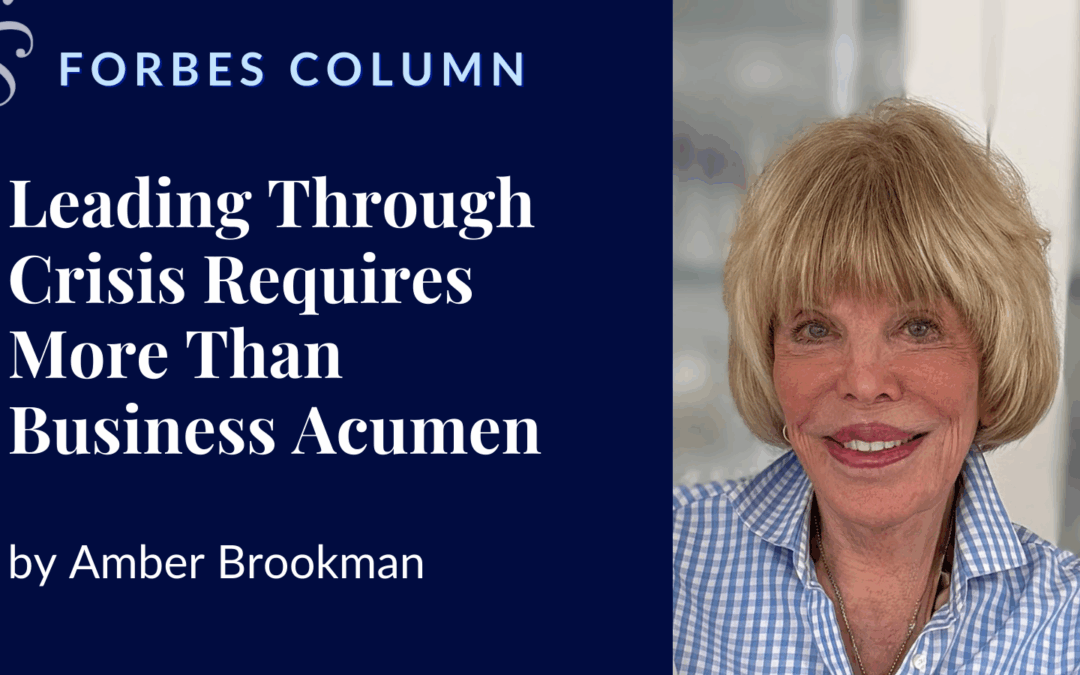
by Eva Glassman | Sep 23, 2025 | Blog, Featured
By Amber Brookman | Brookhill Associates | C200 Member since 1997
Every leader faces moments when the stakes are high and the path forward is unclear. What sets successful leaders apart is the ability to make confident decisions, inspire their teams, and create a culture that can thrive under pressure.
In this Forbes article, C200 member Amber Brookman outlines strategies for navigating uncertainty. She highlights the importance of trusting your instincts, thinking creatively to solve complex problems, hiring talented and loyal team members, and fostering a workplace built on respect and collaboration.
If you are looking for ways to strengthen your leadership approach, this article is a must-read.
Read the full article here.
C200 is a 501(c)(3) nonprofit organization with a mission to inspire, educate, support, and advance current and future women entrepreneurs and corporate profit-center leaders. The views and opinions expressed in this article are those of the individuals quoted or featured and do not necessarily reflect the views, policies, or positions of C200.
by Eva Glassman | Sep 11, 2025 | Blog, Featured
We are proud to announce the official sponsors of the 2025 C200 Annual Conference, taking place this October 16-18 in Nashville, Tennessee.
C200 is a registered nonprofit with a mission to inspire, educate, support, and advance current and future women entrepreneurs and corporate, profit-center leaders.
The C200 Annual Conference is our largest yearly gathering and educates, empowers, inspires, and connects women business leaders through professional development and moments for authentic community experiences.
Thank you to these amazing organizations supporting our Annual Conference this year:


Their support plays a crucial role in ensuring a successful event, supplying important session topics, activities, and more for our attendees.
“We are extremely energized by the support and collaboration from CEO Coaching International and HireBetter for the 2025 C200 Annual Conference,” says C200 CEO Myla Skinner. “We are grateful to partner with organizations who are just as passionate about our community and events as we are, and we can’t wait to see the impact we’ve created together.”
Read below to learn more about the official sponsors of the 2025 C200 Annual Conference.
CEO Coaching International
C200 is proud to partner with CEO Coaching International as an official sponsor of the 2025 Annual Conference.
Thanks to this dynamic collaboration, conference attendees will gain access to several inspiring sessions led by top voices in business, AI, and wellness.
“We’re thrilled to partner with C200 to support women who are leading at the highest levels,” said Mark Moses, Founding Partner and Executive Chairman of CEO Coaching International. “This conference is a powerful platform for connection, inspiration, and growth, and we’re honored to contribute to an event that aligns so strongly with our mission to Make BIG Happen.”
CEO Coaching International works with CEOs and their leadership teams to achieve extraordinary results quarter after quarter, year after year. Known globally for its success in coaching growth-focused entrepreneurs to meaningful exits, the firm has coached more than 1,500 CEOs and entrepreneurs across 100+ industries and 60 countries.
To learn more and connect with a coach, visit: https://ceocoachinginternational.com/contact/
HireBetter
C200 is thrilled to have the support of HireBetter as an official sponsor for the 2025 C200 Annual Conference.
With their support and collaboration, Conference attendees can enjoy exclusive sessions with HireBetter’s experts in leadership, talent, and culture.
“At HireBetter, a 512Financial Company, we believe exceptional leadership unlocks growth, and that belief fuels our work. We’re proud to support C200 because this partnership reflects a shared commitment to elevating women leaders and fostering meaningful conversations around talent, culture, and impact. Now as part of 512Financial, we offer an even broader suite of strategic services that empower leaders and organizations to achieve lasting success. C200’s mission deeply aligns with ours: to help good people build great companies.”
About HireBetter, a 512Financial Company: HireBetter is a strategic talent partner that helps growth-minded companies build aligned, high-performing leadership teams. Recognized by Forbes as one of America’s Best Executive Recruiting Firms, HireBetter specializes in supporting founder-led, private equity-backed, and mid-market organizations through periods of inflection, transformation, and accelerated growth. Now as part of 512Financial, HireBetter provides access to a comprehensive suite of advisory and financial services, helping clients navigate complex challenges and seize new opportunities for sustainable growth.
Learn more: https://hirebetter.com/
About C200
C200 is a registered 501(c)(3) nonprofit organization, and our mission is to inspire, support, educate, and advance current and future women entrepreneurs and corporate, profit-center leaders.
Our membership is comprised of 400+ of the world’s most influential women in business, who connect and uplift one another through C200’s high-impact events, educational programming, and more.
You can learn more about C200’s mission, membership, and programming here: www.c200.org
About the 2025 C200 Annual Conference: The C200 Annual Conference is our largest yearly gathering and educates, empowers, inspires, and connects women business leaders through professional development and moments for authentic community experiences.
You can learn more about and register for the 2025 C200 Annual Conference by October 1, 2025, here: https://web.cvent.com/event/7e367d83-ba7a-4ae8-9046-ce6f484d059f/summary
by Eva Glassman | Sep 11, 2025 | Blog, Featured
C200 is a registered nonprofit that works to support and celebrate the advancement of women in business.
We are proud to announce the incredible organizations partnering with C200 to elevate and expand our extensive roster of year-round educational and networking opportunities.

“Our community deserves the best events and resources, which is why we are thrilled to partner with HireBetter and Wild Heath as annual sponsors of C200,” says C200 CEO Myla Skinner. “Together, we can make a greater impact for all those who benefit from our offerings.”
Read below to learn more about each of our sponsors and how they are making a difference with C200 in 2025 and beyond.
HireBetter
C200 is thrilled to have the support of HireBetter as a 2025-2026 annual sponsor.
With their support and collaboration, C200 is able to offer more unique experiences for our membership and wider community of supporters, fostering important connections and further enriching the C200 community and those passionate about our mission.
“At HireBetter, a 512Financial Company, we believe exceptional leadership unlocks growth, and that belief fuels our work. We’re proud to support C200 because this partnership reflects a shared commitment to elevating women leaders and fostering meaningful conversations around talent, culture, and impact. Now as part of 512Financial, we offer an even broader suite of strategic services that empower leaders and organizations to achieve lasting success. C200’s mission deeply aligns with ours: to help good people build great companies.”
About HireBetter, a 512Financial Company: HireBetter is a strategic talent partner that helps growth-minded companies build aligned, high-performing leadership teams. Recognized by Forbes as one of America’s Best Executive Recruiting Firms, HireBetter specializes in supporting founder-led, private equity-backed, and mid-market organizations through periods of inflection, transformation, and accelerated growth. Now as part of 512Financial, HireBetter provides access to a comprehensive suite of advisory and financial services, helping clients navigate complex challenges and seize new opportunities for sustainable growth.
Learn more: https://hirebetter.com/
Wild Health
C200 is proud to welcome Wild Health as a 2025-2026 annual sponsor.
With their support, C200 can expand the quality, frequency, and scale of many yearly events and opportunities, further enriching the C200 experience for our membership and wider community of business professionals who utilize our much-needed resources.
“We’re thrilled to partner with C200 to bring our personalized, data-driven approach to health optimization to a community of women who lead with purpose and impact. We’re thrilled to empower high-performing leaders to improve their longevity, resilience, and peak potential.”
Wild Health is a concierge Precision Medicine service offering personalized, genetics-based health care to maximize your health span. Founded by a pair of emergency medicine physicians with a penchant for pushing the boundaries of scientific discovery, Wild Health’s ethos is steeped in the idea of personal exploration. With a team of board-certified physicians, accredited health coaches, and hospitality-driven care coordinators, we provide patients with a distinctive care experience defined by collaborative treatment, unmatched expertise, and unparalleled results.
Learn more: https://www.wildhealth.com/
About C200
C200 is a registered 501(c)(3) nonprofit organization, and our mission is to inspire, support, educate, and advance current and future women entrepreneurs and corporate, profit-center leaders.
Our membership is comprised of 400+ of the world’s most influential women in business, who connect and uplift one another through C200’s high-impact events, educational programming, and more.
You can learn more about C200’s mission, membership, and programming here: www.c200.org
by Eva Glassman | Sep 11, 2025 | Blog, Featured
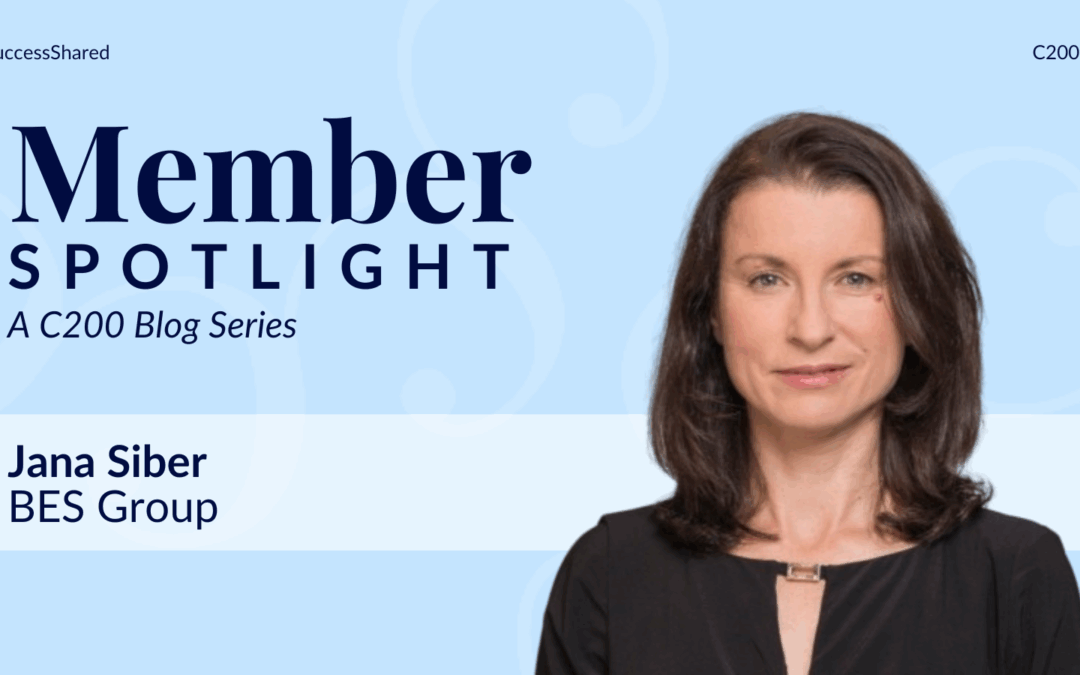
Jana Siber is a Group CEO for BES Group, a company providing risk management services for systems and operations to over 35,000 global customers. With an initial background in consulting, Jana developed an expertise in leading several companies in public transportation, energy, and engineering. Between work and leisure, Jana has visited nearly one hundred countries and enjoys traveling with her family. Jana has been a Member of C200 since 2025.
Eva Glassman: You recently started a new role as a Group CEO for BES Group. What’s something new about this role you’re looking forward to exploring?
Jana Siber: I am very excited about my new role. While I am very familiar with transformations of businesses with large frontline workforces, this is the first time I am facing this challenge within a private-equity owned business, which brings a whole set of new types of stakeholders as well as a much faster-paced dynamics.
EG: What has your career journey been like?
JS: I grew up in the Czech Republic, then came to the UK in my early twenties to study English and ended up staying to study Psychology at Oxford. When I was at university, I picked up a leaflet about management consulting, and I thought this was a fantastic opportunity for someone who doesn’t really know what they want to be.
When I graduated, I started my career as a management consultant with Booz Allen Hamilton and Accenture before going back to school to get my MBA at London Business School. Coming out of business school, I decided to go back to consulting and joined Bain, where I spent the next eight years.
After Bain, I joined Avis Budget Group—initially as a commercial strategy director and then going on to manage the franchise network of Avis Budget, initially EMEA. Eventually, I added Asia Pacific as well as Latin America to the company portfolio.
After about five years of managing the global franchise network, which is largely a commercial role, I really wanted to have full P&L responsibility. So, I joined Arriva, which is a UK-based public transport company with a heavy European presence. I became a Managing Director of Mainland Europe with a portfolio of fourteen countries. I started building on the skillset of managing large, frontline dispersed workforces.
This theme continued into my next job before my current role, which was Managing Director for British Gas Services. British Gas is the largest provider of heating solutions and services, with a workforce about 15,000—about half of which are gas engineers who install and provide maintenance and servicing for boilers, heat pumps, and other specialized equipment.
I came into British Gas about four years ago, and my remit was to fix the business; it was losing money, employee engagement was low, and customer complains very high. It took me just over three years to turn the business around both operationally and commercially. By the time I was ready for my next challenge, the business was profitable and growing again.
EG: You mentioned earlier that you didn’t know what you wanted to do for your career when you studied at Oxford. What are some lessons you learned throughout your career that helped you determine your career trajectory?
JS: I really had no clue what I wanted to be. I knew I wanted to go into business, but as a psychology grad, you don’t really know what business is. What attracted me to management consulting is that you don’t need to decide what you want to be; you work on different projects with different companies in different industries. I enjoyed getting in-depth experience in various, disparate areas of business.
I went back to school for my MBA, because I had a much better idea of what business is and wanted a more holistic view of how it is actually run. In particular, I was curious about the financial side and the impact you can have as a P&L manager.
During my MBA, I became torn between staying in consulting or going into industry. What I liked about consulting is that you get right in the room with the CEO talking global strategy; meanwhile, if I were to go into industry, I didn’t want to start quite low down in the organization.
My decision to go into industry happened during my eight years with Bain after my MBA. I realized that the larger the team, the longer the project—I enjoyed the work even more. I could see the impact I was making. It was a sure sign that I wanted to own a piece of business, to see and manage the results—not just implement the strategies.
Over the years, I became aware of my strengths: the combination of strategic thinking and people management. It wasn’t a sudden revelation but a slow discovery over the years. It helped me navigate which way I wanted to go.
Once I went into industry, I very quickly gathered I wanted to work in a CEO role. I asked myself: What does a good CEO need to have as a toolkit? From there, I selected roles that helped me develop that toolkit.
For example, managing hundreds of franchises across the world at Avis gave me a fantastic commercial toolkit. I learned how to deal with different cultures and influence organizations that didn’t necessarily report to me. While it was great strategic and commercial experience, I still felt lacking in operations, which is why I eventually left to join Arriva as Managing Director. There, I grew and managed a portfolio of fourteen Mainland European countries while looking at capital allocation and pressure testing strategies. On the people management side, I was building and swapping teams in various countries.
At this point, the last bit of experience I felt I needed was closeness to the frontline and to operations. That’s why my role at British Gas was so interesting to me; it allowed me to showcase my skills in strategic visions, people management, and execution.
EG: It’s refreshing to hear that there wasn’t a single moment in your career journey where you figured everything out. Learning what you want along the way, over a long period of time, is probably more common than we think—and something we should praise and encourage more.
JS: My daughter is at university at the moment, and she doesn’t know what she wants to be—and that’s absolutely okay. I always tell her that it’s okay to just try things; it doesn’t mean that you will end up doing it forever, but you won’t know whether it’s for you if you don’t try. While there are a few people who are fortunate enough to know what they wanted to be since they were nine, they’re in the minority.
EG: How did you become a C200 Member? What drew you to the organization?
JS: A CEO friend of mine and I were out to lunch with another colleague of ours, and we were talking about the different professional networks which we were a part of. This colleague mentioned C200, and I was immediately interested in terms of it being a group specifically for P&L leaders.
It’s a very specific experience to be a woman in a P&L ownership position, so I’m very eager to connect with more of these women. A lot of other networks I’ve been a member of also include functional leaders or skew heavily toward a particular industry or position. C200 has Members across a diverse range of industries and very specific criteria for P&L responsibility.
Let’s face it: being a CEO is a lonely job. You’ve got a team, but as the most senior person in the company, it’s quite difficult to find peers. Having networks where you can meet others is really important for that reason; however, many of these networks are overrun by men. While I’m happy being part of these networks, it’s important for women leaders to have dedicated spaces to connect as well.
EG: Were you able to connect with women throughout your career journey, or were many of your mentors men? In general, what was your experience like as a woman going up the career ladder?
JS: I didn’t have a formal woman mentor at any stage in my career. When I needed to figure certain things out, I would talk to peers or to my male mentors. I didn’t have a problem with talking to men going through similar experiences as me.
Generally speaking, management consulting has been quite ahead of the curve when it comes to gender diversity. When I joined Bain in 2005, there were 350 people at the company; while there were some women there, there wasn’t a woman partner at that point. I joined when my daughter was six months old, but I didn’t want people to know I had a baby; I feared they would look at me differently. I thought it would be better if they didn’t know, in part because I didn’t see many women with kids across that office.
However, fast-forward eight years, we had a large number of women partners, and many of our employees—men and women—were taking various part-time options to be with their families. It’s become so much better. It’s been quite interesting to watch that journey and how attitudes have changed in such a relatively short time.
When I talk to people now, I tell them that I was very much in my head about sharing whether I had a child when I first joined Bain as an MBA grad. I had my second child about four years into my time at Bain, and everyone was incredibly supportive when I went on maternity leave. Whether you decide to have kids and step back from your career, decide not to have kids, choose to work part-time or full-time—there are so many different models for women in the workplace, and it helps to see senior leaders exemplifying them.
I haven’t found a model that works 100% perfectly; there are always pros and cons to everything. For example, my part-time friends and colleagues tend to feel that they are ‘missing out’ on the job progression, the full-timers I know struggle more with the work-life balance and missing out on family life. Whatever you decide, having a support group of friends with similar issues always helps. Being able to talk with each other doesn’t fix any problems, but we all navigate things a bit easier knowing we aren’t alone.
Now, I always advise my mentees to just be kind to yourself. It’s tough, especially if you decide to go down the route of having children. Whatever route you decide, you will never feel like you’re winning—but you actually are. Many, many years later, you’ll see it. Don’t put yourself under too much pressure.
Having role models ahead of you in the company, women that you could see yourself being in a few years, is quite useful and helpful. Because I’ve been in traditionally male-dominated industries, I haven’t had that experience. There haven’t been many women I could look up to, which is why I sought out networks of friends and peers. They filled that gap, so I didn’t feel like I was missing out. However, looking back, it would have been nice to see someone at my company ahead of me who looked like me.
EG: What does being a “woman in business” mean to you? How do you apply that thinking to what you do and how you lead others?
JS: I like to think of myself first as a really good business leader. Then, I think of myself as a woman. However, that’s not how you get perceived; there will be a lot of perceptions and prejudices from others to deal with. As a woman in a very male-dominated industry such as public transport, car rentals, and gas engineering, you experience pros and cons. At first, people definitely looked and me and thought, “What does she know about buses and trains? About boilers?” You have to prove yourself a little bit more than the men, and that’s still the reality today.
However, because women generally have always had to prove ourselves more, we tend to be more capable. In many of my jobs, I’ve had some incredibly rewarding experiences where I can just say, “Yes, I’ve cracked it. Look, I did that.” It’s going to take many years before we really get rid of the differences in how women are perceived compared to men. There’s always an element of feeling like you have to be better than your male peers—just to be considered equally capable.
EG: When you aren’t busy at work, how do you like to spend your free time?
JS: My older child, a twenty-year old daughter, is at university, so I always enjoy when she comes to visit, or I visit her. My younger one, a son, is sixteen and still at that silent grunting stage! I try to be there as much as I can and not impose too many rules and regulations on him. We all still enjoy traveling together. Every year, we go somewhere different—just the three of us.
We also love to ski—although my partner is South African and not very much into skiing. We do a lot of hiking in the summers, especially in the different countries we’ve traveled to.
I’m extremely fortunate that I’ve traveled the world extensively, especially when I was in my global role at Avis. I don’t know how many countries I’ve been to, but I would imagine the number is nearing one hundred. I’ve gotten to go places normal tourists don’t get to see. If I were to return to a country I loved, I would go back to Japan. I love the juxtaposition of their ultra-modern cities with the rich history and tradition of their land and culture.
Having slightly older children means I actually have a lot of time for myself. I like to keep fit and belong to a rowing club, which is a lot of fun. It helps me stay active, but it’s also social. I also run—very slowly and infrequently—but I try to keep the cardio going. About a year ago, I got into resistance training as well.
EG: Besides what you mentioned about being kind to yourself, what advice do you have for aspiring women business leaders to advance their careers?
JS: The most valuable piece of advice I was given as a young woman is, when you are presented with an offer or task, always say yes and worry about it later. Your immediate thought will probably be, “I’m not sure if I can do this.” Ignore it and say yes. Take it. Panic about it later. The odds are; you’ll realize you can actually do it.
In general, women tend to play the cautious side. We tend to think analytically and explore why we aren’t the right person for the task. If you don’t have the confidence, “fake it ‘till you make it” really works—it’s the only way we can get on a level playing field with our male counterparts.
EG: “Fake it ‘till you make it” is something I’ve heard so many times before—but clearly, not enough of us are doing it if we’re still talking about it. You have to start doing the things you want to do, because otherwise, you’ll always be waiting to start.
JS: As women, we are often very capable, but don’t have the confidence or come across as having it. When I started just saying yes—not letting myself begin to doubt or question—I proved to myself again and again that I can do more than I ever thought. Always leading with, “Yes, absolutely, I can do this,” even if you don’t believe it in the moment, is actually really helpful.
C200 is a 501(c)(3) nonprofit organization with a mission to inspire, educate, support, and advance current and future women entrepreneurs and corporate profit-center leaders. The views and opinions expressed in this article are those of the individuals quoted or featured and do not necessarily reflect the views, policies, or positions of C200.
by Eva Glassman | Sep 9, 2025 | Blog, Featured
By Kate Isler | TheWMarketplace | C200 Member since 2021
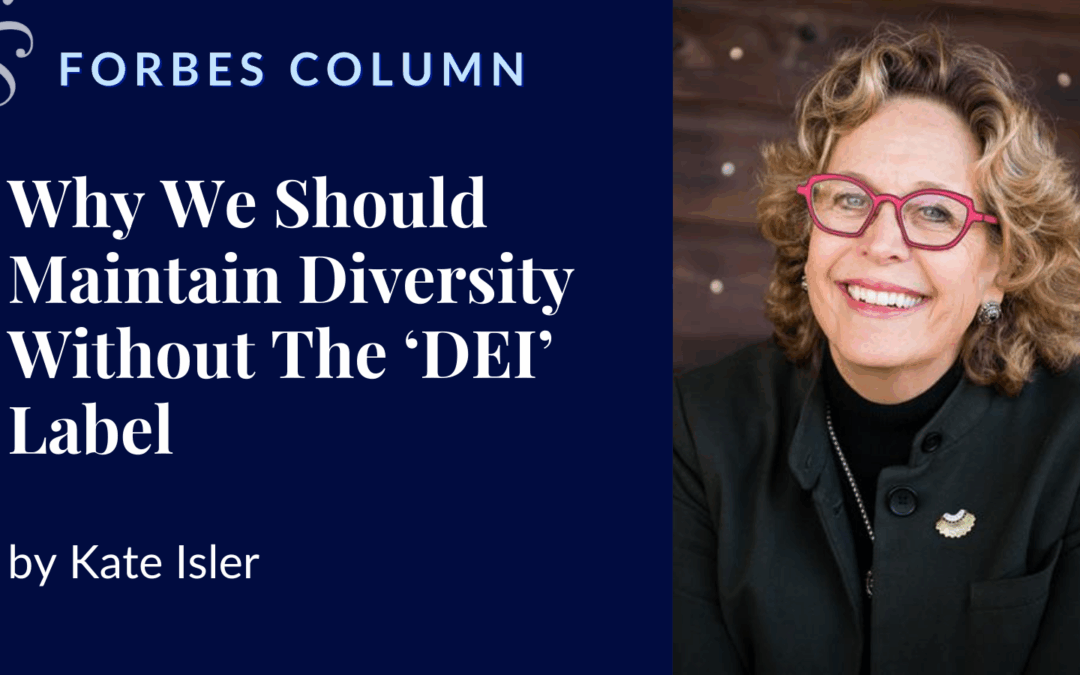
How do businesses sustain diversity when the term DEI has become politically charged?
C200 Member Kate Isler explores this challenge in her latest Forbes article, sharing actionable strategies for building inclusive, high-performing teams without relying on the DEI label. From aligning teams with customer demographics to embedding inclusive practices in leadership development, Kate shows that the mission hasn’t changed—just the language.
Read the full article here.
C200 is a 501(c)(3) nonprofit organization with a mission to inspire, educate, support, and advance current and future women entrepreneurs and corporate profit-center leaders. The views and opinions expressed in this article are those of the individuals quoted or featured and do not necessarily reflect the views, policies, or positions of C200.