by Eva Glassman | Nov 20, 2025 | Blog, Featured
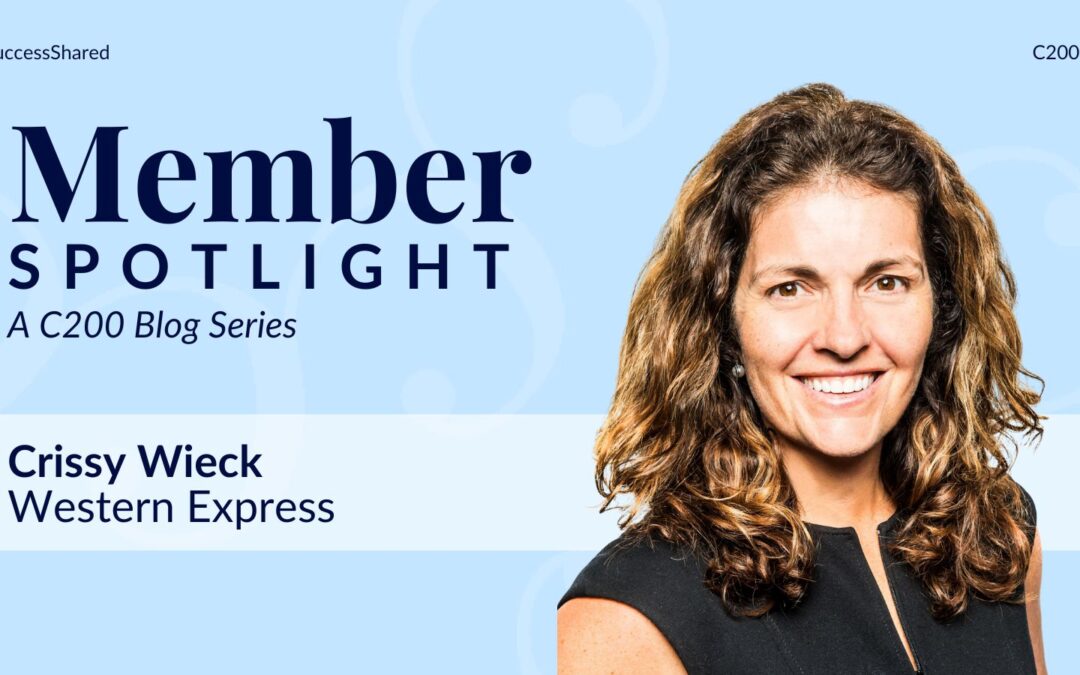
Crissy Wieck is the Co-President of Western Express, a trucking and transportation company based in Nashville, TN. Crissy moved from the tech industry to the trucking industry to lead Western Express after a multi-decade career at Dell. Crissy believes that being one of few women on the team at many points in her career has given her an advantage, because her work and impact is even more visible. Outside of work, Crissy enjoys traveling with her husband and four kids and believes daily exercise is important for the mind and body. Crissy has been a Member of C200 since 2025.
Eva Glassman: Please share with our readers more about Western Express and your role as leader and Co-President. What is your day-to-day like?
Crissy Wieck: I recently had a week where one day, I was on a 5 AM flight to Charlotte to speak with global supply chain leaders; the next, I was back in the office here in Nashville at 7:30 AM for a day full of meetings, one-on-ones, and customer calls; and at the end of the week, I took a day off to visit colleges with one of my kids (I have four kids and two step-kids).
Every day is different; you’re constantly putting out fires and doing proactive work at the same time.
EG: What are the kinds of things that emerge that you have to navigate and pivot for?
CW: There are things that pop up that all leaders must be equipped to handle, such as managing team dynamics. However, as it relates directly to our industry, we’re in a down market. The trucking industry would argue, from a product demand perspective, that we’ve been in a recession since the end of 2022. Adapting financial structures has been critical during this difficult time for the industry.
Another industry-specific, immediate issue we inevitably deal with is when our trucks have accidents on the road. When big, heavy pieces of equipment like trucks get involved in accidents, it has major ramifications throughout the company’s operations.
EG: You previously worked at Dell—a company in a very different industry from trucking—and that you studied business in college. Did you always know you wanted to lead a business? I’m also curious how your experience in the tech industry has influenced your experience in the trucking industry.
CW: In college, I was a double major in business and history. For some of my college career, I thought I might want to be a history teacher, but I also thought that having a business degree was practical and interesting. Both of my parents worked; my mom was the administrator of a $2 billion pension fund, investing money and effectively running a business. Meanwhile, my dad had always been in sales. I always found their respective careers interesting.
While my careers at Dell and Western Express are in different industries, they are both experiences where you are solving problems for customers. One is a technology problem; the other is a transportation problem. Even still, technology plays such a crucial role in today’s world of trucking, so my experiences do overlap in many ways.
I loved my time at Dell; by the time I was thirty, I was responsible for $2 billion on the P&L side, which gave me a lot of CEO-like experience. This served me well when I came to run Western Express with my dad after his business partner passed.
EG: Do you look back at any particular moments in your career journey and now recognize were pivotal to your success? Which are they?
CW: At the very beginning, I’m grateful that I trusted myself to not have all the answers right away. As a twenty-one-year-old first starting to work for Dell, I went through the same three-week training that everyone else did. I thought, “These guys are experts, so I’m just going to do what they tell me to do.” I wasn’t out there trying to be the next Michael Dell; I felt like I was given the playbook for how to succeed, and I simply followed it. That yielded great results for me as an individual contributor.
As I assumed leadership roles, I looked at the leaders I admired, both in and out of Dell, and tried to emulate them. In the same way, I paid attention to the qualities of leaders I didn’t like and made sure to avoid those. To this day, I don’t want to reinvent the wheel; I want to use what works and make it my own.
I left Dell because I had a leader tell me that she was betting against me on a call with all my peers. I didn’t want to be in a place where people were comfortable saying those kinds of things, especially in a group of people. It was so uninspiring.
Around that same time, my dad’s business partner had passed away, and my dad asked me if I would join him at Western Express. I felt like these were both signs that I needed a change in my career. I want to be a leader that people want to work with; I don’t ever want to bet against anyone.
EG: I’m curious about your journey to becoming a C200 Member. How did you discover C200, and what interested you enough to seek membership?
CW: I am a pretty low-profile leader in Nashville. I’m not big on social media like Facebook or LinkedIn; I’m not impressed by those things. I find that the most interesting people don’t have to say it. I’m more interested in the substance of a person; I’m typically the one who goes to the deep question first. If I want to get to know someone, I’ll give them a call.
I’ve actually been aware of C200 for several years; back in 2022, Nancy Peterson-Hearn encouraged me to join. I assume Nancy came to know me because my husband was running for mayor at the time. That was the first time I was more in the public eye, and many more people came to know me tangentially through my husband’s campaign.
When Nancy first asked me to join C200, I actually declined. I’m typically averse to joining groups or associations (again, I like the low-profile). However, Nancy was persistent; earlier this year, she asked me again. When we talked about it, I explained that I’m someone who is very clear on my time and priorities: I have six kids, chair the board of an all-girls school, and run a billion-dollar business.
Nancy shared with me that several Nashville business leaders, all of whom I already knew, were Members. So, I reached out to all of them and asked them if C200 was valuable for them. And you can probably guess their answers—I’m here now!
Again, as someone who doesn’t normally seek out groups like C200, I’m looking forward to experiencing the level of authenticity within this community so many of the Nashville Members have spoken to.
EG: Going back to your career journey, what was your experience like finding and connecting with other professional women?
CW: I have great men and women mentors. When I was at Dell, there was a woman who was roughly five years older than me and had kids slightly older than mine. I only worked for her briefly, but during that time, I watched her as she went through a betrayal in her marriage. I really admired the way she navigated the situation, her family, and her work all at once. It taught me how important it is to properly balance everything on the outside and inside together. She was a great mentor, and we’ve remained very close.
The CMO of Dell was also a mentor of mine. She lives in Nashville and has been in my life for over twenty years now, even after I left Dell. We actually made her Board Advisor for our company for a period of time.
Another mentor of mine was the man who was site lead at Dell before me. When he decided to leave the role, I was thirty and pregnant with my third child. I thought, “Surely, there has to be someone better than me to take over this role.” Not only did I have the responsibility of being a mother, I still felt quite young. He told me, “I’ll give you a couple days to come up with someone else to take the role.”
That was a really great thing for him to say, because I looked around the organization and realized I actually was the best person for the job. It built up my self-awareness tremendously. While I was plenty confident in myself, I never imagined myself having a job that big at just thirty years old. He helped me see that it was all irrelevant. It didn’t matter that I was pregnant with my third child, or that I was young—he knew I could do it. He and I still have lunch a few times a year. He’s a great human.
I’ve been lucky to have met these incredible people and have had them as mentors throughout my career.
EG: What does being a “woman in business” mean to you? How does it impact the way you lead?
CW: At times in my career, I’ve thought of it as being a really great advantage. For example, when I started at Dell, there were only four women out of the thirty total people in the building. We stood out for that reason alone, but I was also the youngest of the four—so I really stuck out. I saw that as an advantage for me, because everyone knew who I was right away, and so my good work would be noticed more.
However, there have been times where I’ve felt uncomfortable by sticking out. I remember a time when Jenny Hinkle —the former CFO of Knight-Swift and a legend in the trucking industry—and I attended a convention in Phoenix together. We experienced a “record-scratch” moment when we walked into the room; we were the only two women in a room of four-hundred people. We walked across the whole room together, and it was like we could feel every single eyeball looking at us. It was the clearest moment for me to understand there were seriously no women in our industry. It was the first time I ever felt truly uncomfortable from a gender imbalance perspective.
All that said, I’ve never felt like there’s a table I shouldn’t be at. I went to an all-girls school growing up, so I’ve had it ingrained in me that I belong in every room. No one has ever made me feel inferior for being a woman—I don’t know if that’s because their attempts fail, or because they’ve never tried.
I do think I’ve been able to broaden the perspectives in most of the rooms I’ve been in. I take great joy in that. But is that because I’m a woman? I don’t know. I think I have that ability because of who I am as a person. While being a woman is a part of that, I don’t think the people in the room would say, “She’s really broadened my perspective about women.” I think they’d say, “She’s really broadened my perspective about life.”
EG: When you aren’t working and have some free time, how do you spend it?
CW: With family. I’m very engaged with my four biological children. I love to travel with them and my husband. Spending time with my girlfriends is always wonderful, too.
I was a college athlete, so I’m very into staying in shape. I spend time exercising every day and keep up a workout regimen.
EG: What is your advice to aspiring women business leaders to advance their careers?
CW: My mom always told us to value no-one’s opinion greater than our own. That doesn’t mean you instantly discredit other people’s opinions—it just means that you listen to and trust yourself. Don’t diminish yourself or your own voice. When making choices, you don’t always go with your voice in the end, but don’t value anyone else’s more than yours in the process.
C200 is a 501(c)(3) nonprofit organization with a mission to inspire, educate, support, and advance current and future women entrepreneurs and corporate profit-center leaders. The views and opinions expressed in this article are those of the individuals quoted or featured and do not necessarily reflect the views, policies, or positions of C200.

by Eva Glassman | Nov 13, 2025 | Blog, Featured
C200 wants to congratulate and honor our 2026 Legacy Class!
Dominique Raccah
Larraine Segil
Lorrie Norrington
Marcia Meyer
Tanya Fratto
Legacy Members are individuals who have been a C200 member for 25+ years. The 2026 Legacy Class joined C200 in 2001 and will be inducted into the ranks of our Legacy Members starting January 1, 2026.
Over 60 of our 400+ members are among our Legacy status. We are grateful for our rich history as an organization founded in 1982; many of the women who founded C200 are still active members today. Our Legacy Members are shining examples of the long-term power and impact C200 has had over our 40+ year history, and the progress women in business at large continue to experience and fight for today. Without the influence of our Legacy Members, current and future women in business would not have so many opportunities to advance in their careers as they do today.
Dominique Raccah
 Dominique Raccah is the visionary Publisher and CEO of Sourcebooks, which she founded from her home in 1987. She has transformed Sourcebooks into a leading book publishing house renowned for its author-centric approach to innovation. Publishing bestsellers in everything from teen thrillers, literary fiction, and romance to children’s books, college guides, journals, and mysteries, Sourcebooks is dedicated to changing lives through books.
Under Dominique’s leadership, Sourcebooks has become the sixth-largest book publisher in North America with over 300 employees and hundreds of national and international bestsellers. Recognized as a leader in data and innovation, Dominique was named one of Publishers Weekly’s “Top 25 Book Business Changemakers” in 2022 and received the Publishing Titan Award in 2023 from UJA-Federation of New York. Sourcebooks has been honored on Fast Company’s lists for Best Workplaces for Innovators and Most Innovative Companies, and the #2 Most Loved Workplace by the Best Practice Institute (2024). In February 2025, Dominique was included in the Washington Post’s Post Next 50, a distinguished list of leaders who are “shaping our society in 2025,” and in March of that year was recognized as one of INC’s Female Founders for the second year in a row.
Dominique’s entrepreneurial spirit and passion for books have made Sourcebooks “by far the most successful self-made publisher operating in the 21st century,” according to Publishers Weekly.
What has C200 meant to you these past 25 years? My experience as the only woman CEO in the top six publishers—and the extraordinary community I’ve found in C200—has reminded me again and again that leadership is about opening doors: removing barriers, building community, and creating space for new voices.
What is something you wish you knew 25 years ago? Don’t wait for permission. So much of a leader’s strength comes from embracing experimentation, from asking “what if we tried it this way?” even when the path isn’t clear. I built Sourcebooks as an outsider, without the blueprint of how publishing was “supposed” to work—and that outsider lens became an advantage. I learned that growth doesn’t come from hierarchy or titles, but from creating an environment where every person’s idea can be brought to the table. Leadership is not about having all the answers; it’s about removing barriers, sharing the journey, and building communities where innovation and opportunity are open to everyone.
Larraine Segil
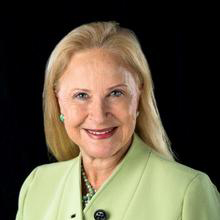 Larraine Segil is a seasoned Entrepreneurial Executive and an experienced public and private Corporate Board Director with general Management experience. She is Founder, Chair and CEO of the non-profit charity Foundation, The Exceptional Women Alliance Foundation, a proprietary, metrics driven, Peer to Peer mentoring collaborative, enabling high level, high potential women to reach their dreams in over 30 different industries with more than 170 women leaders from the USA, Canada and Europe.
Ms. Segil was formerly an Owner & Director of Vantage Partners, which evolved out of the Harvard Project on Negotiation. It’s Partners/Directors have authored many books including Getting to Yes and Difficult Conversations. Ms. Segil served Global 100 & Fortune 500 companies, assisting them to create and manage their critical business relationships with suppliers, customers, alliances, joint ventures or channel partners.
She is former CEO/Co-founder of several entrepreneurial companies which include Advanced Materials, a privately held company providing products and services to aerospace and electronics manufacturers worldwide; as well as the privately held chain, Airport Urgent Care, providing free standing ambulatory health care clinics at airports within the Southwestern region of the United States.
Ms. Segil has also served on the Tropical Diseases Special Advisory Group on Alliances (SAAG), in Kuwait and Geneva for the World Health Organization (WHO/UNICEF/UNDP/World Bank) from 2009-2012.
Additionally, Ms. Segil presented a two-day Executive Education program on Global Alliances for 24 years at The California Institute of Technology (Caltech)and for 5 years as Adjunct Professor at Southwestern School of Law and Pepperdine University Straus Center for Conflict Resolution.
Ms. Segil is a licensed attorney admitted to practice in both the State of California and the United States Supreme Court.
Ms. Segil’s roles also include serving as Vice Chair of the Board of Alliance Strategies, a privately held global company, and formerly as Nom, Gov and Comp Chair for Calprivate Bank (OTC:PBAM), & the National Association of Corporate Directors (NACD) Pacific Southwest as Chair of Nominating and Governance where she is now Board Emerita. She has been on the International Advisory Board for APCO Worldwide since 2009, Member of the Board at Pepperdine, Graziadio School of Business, and Board Emerita at UCLA, Anderson School of Business. She has served on the Board of Frontier Communications (NASDAQ:FTR) from 2005-2017, Audit, Nominating/Governance, Compensation, and Retirement committees. She served as Chairman of the Board at Kandela, Inc. until the company was sold in April 2019. Ms. Segil served on the Board of Vanir Construction Management’s Audit and Nominating committees until April 2018 and as a member of the Board of Trustees for Southwestern School of Law from 2008-2019. Larraine is the past Chair of the Committee of 200 Foundation and the Vice Chair of the C200 Governing Board and is a Founding Member of Paradigm for Parity and a Member of the Fast Company Impact Council.
Larraine is an accomplished author, keynote speaker, and expert in the area of Strategic Alliances and Leadership having written and published five business books which include, Measuring the Value of Partnering (AMACOM), Partnering: The New Face of Leadership (AMACOM), Intelligent Business Alliances (Random House, Times Books): Dynamic Leader Adaptive Organization and Fast Alliances: Power your E-Business (John Wiley and Sons), in addition to a novel entitled Belonging (Penguin Dutton and Audible on Amazon) and children’s books, songs and multiple cookbooks).
What has C200 meant to you these past 25 years? C200 has been a part of my life for decades and the friendships I have made are life-long and deep. I feel honored to have served as Vice Chair of the Governing group, Chair and Vice Chair of the Foundation, Western Region Chair, and a C200 Board Member for many years. Building out the Western Region from 3 or 4 Members to over 100 was one of my happiest accomplishments. Working with Kathryn Swinteck, Gay Gaddis, and other Board Members was fun and fulfilling. I feel privileged to have been part of C200 for a significant part of my professional life.
What is something you with you knew 25 years ago? My advice would be to get involved and play a role in C200 not just be a Member – that way you will meet amazing women and learn to love and be loved by many.
Lorrie Norrington
 Lorrie Norrington has over 40 years of leadership in technology, software, and internet businesses. She is an Operating Partner at Lead Edge Capital and serves on the boards of Colgate Palmolive (Lead Director), HubSpot (Chair of the Board), and Asana (Lead Director). Her interests include software, AI, and quantum computing.
Previously, Norrington was President of eBay Marketplaces, President & COO of eBay, President of eBay International, and CEO of Shopping.com. She also held senior roles at Intuit and spent nearly 20 years at GE, where she was an Officer and CEO of GE FANUC Industrial Automation.
She holds an MBA from Harvard and a BS from the University of Maryland.
What has C200 meant to you these past 25 years? C200 has broadened my network and knowledge over 25 years in a way nothing else has!
What is something you wish you knew 25 years ago? Something I wish I had known going up in my career is: It’s not worth worrying about. It’s only thinking and doing that matter.
Marcia Meyer
 Marcia Meyer is the Chairman, Chief Executive Officer, and Founder of The Be Kind People Project, a public 501c3 non-profit focusing on delivering youth-relevant learning opportunities that inspire humanity, academic achievement, civility, and healthy living so that our student generation will grow into respectful, responsible, and caring citizens and leaders.
Marcia had a successful 26-year corporate career prior to establishing The Be Kind People Project, highlighted with her work as a senior executive at PetSmart during its growth from a regional start-up to a multi-billion-dollar national category leader. Marcia’s experience includes senior leadership positions in marketing, services, international business, procurement, and operations. Throughout her career, Marcia has earned recognition and respect for her notable skills in strategic planning, branding, concept development, change management and customer engagement. She is an expert in leading growth strategies for organizations and is a skilled leader of people. Prior to her business career, Marcia followed the education tradition of her family as a secondary Spanish teacher in rural and low-income schools.
Using the combination of a strong business background and her personal values, Marcia has re-defined what being a full-time volunteer after retirement can look like through her work with The Be Kind People Project as a servant leader working for a greater purpose for youth. Beginning from a community effort she led to thank teachers, The Be Kind People Project has reached over 5 million students nationwide since 2012 through innovative creative arts and live entertainment, and academic, health, and character education programs.
Marcia believes strongly that bringing together people who want to work collaboratively to enhance the lives and positively impact the personal values of our children, our schools, our families, and our communities is one of the biggest personal investments one can make in America’s future.
Marcia Meyer is a member of The Committee of 200, on various boards, and a supporter of Arizona philanthropy. She has been a United States delegate to the World Kindness Movement and received the prestigious 2015 Hon Kachina Award for Exceptional Arizona volunteerism, was recognized in 2017 by the Phoenix Business Journal as an Outstanding Woman in Business, and 2025 award recognition from ASU Gammage and Arizona Trends for the work in integrating arts and education in Arizona. Marcia has also used her commitment to service and living one’s values through various capacities at her church. She and her husband, Andrew, have two grown children and have had the unmatched joy provided by three grandchildren. They enjoy international travel, theater, and are avid sports fans of the Arizona Diamondbacks, Phoenix Suns, and Arizona Cardinals.
What has C200 meant to you these past 25 years? Through C200, I’ve discovered an empowering network of authentic women leaders whose wisdom inspires confidence, sparks innovation, and supports decisions that shape the future.
What is something you wish you knew 25 years ago? Leadership isn’t a solo act! Surround yourself with those who lift you, stay open to new possibilities that will expand your imagination, share generously, and always lead with kindness and grace.
Tanya Fratto
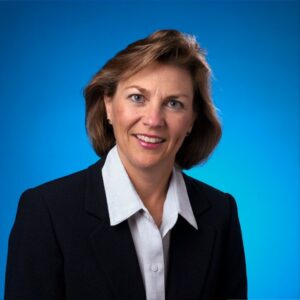 Tanya was born in Ft. Benning, Georgia. She grew up in Alabama and attended the University of South Alabama. After graduating with a B.S. Degree in Electrical Engineering in 1983, she joined General Electric’s Manufacturing Management Program. This two-year program allowed Tanya to explore various assignments in operations with GE’s Aerospace Businesses in Daytona, Florida and Pittsfield, Massachusetts. Tanya remained with GE after completing the program and progressed through a number of senior leadership positions in GE becoming a GE Officer in July 2000.
Tanya’s 25+ years with GE included roles in GE Aerospace, GE Plastics, Corporate Sourcing, GE Appliances, GE Consumer Service, and GE’s Superabrasives’ businesses. She had a number of responsibilities that allowed her to build a skill set in operations, supply chain management, marketing, product management, Six Sigma, profit and loss, and portfolio management.
Tanya became President and CEO of GE’s Superabrasives’ business in July 2000. During her 11+ years, running this industrial diamond business, Tanya led the business through three ownership changes. GE divested of the business in January 2004 to a private equity company, Littlejohn & Company, LLC. She led the sale of the business again to a Swedish company in March 2007, Sandvik AB. After a successful integration into Sandvik, Tanya left in May 2011.
Currently, Tanya sits on the board of Advanced Drainage Systems where she serves on their Audit Committee and the Governance committee. Her previous board experiences include Boart Longyear, Smiths Group Plc, Mondi Plc, and Ashtead Plc.
Tanya business affiliations include the Committee of 200, IMPACT 100, St. Margaret’s Women’s Club, and Alabama Junior Miss. During her spare time Tanya enjoys golf, tennis, road biking, hiking, and travel. She’s blessed to have a wonderful husband, David Blair, and her mom, Sylvia Womack, who’ve supported her on her journey.
What has C200 meant to you these past 25 years? For 25 years, the Committee of 200 has challenged me to grow, inspired me to give back, and connected me to extraordinary women who redefine what leadership means. It has also given me some of the greatest friends a girl could ever ask for!
What is something you wish you knew 25 years ago? I’d tell myself to worry less about being perfect and focus more on being present. The moments that matter most won’t be on your calendar.
Donations to C200 ensure more businesswomen have access to our quality network, Advancing Women Programs, and events. Click here to donate.